What Are Solar Screens for Windows? How Exterior Mesh Stops Heat

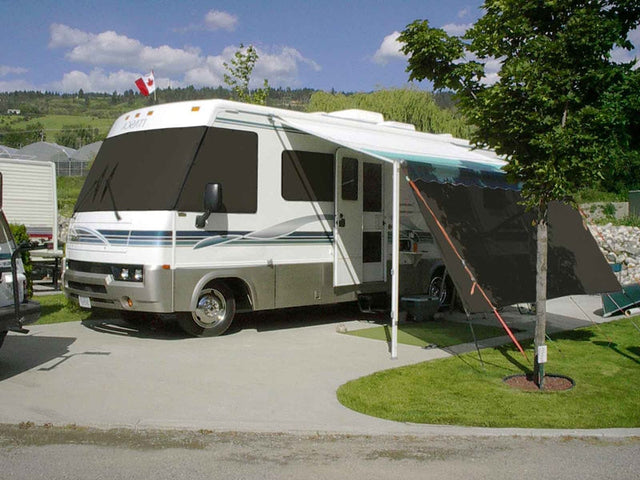
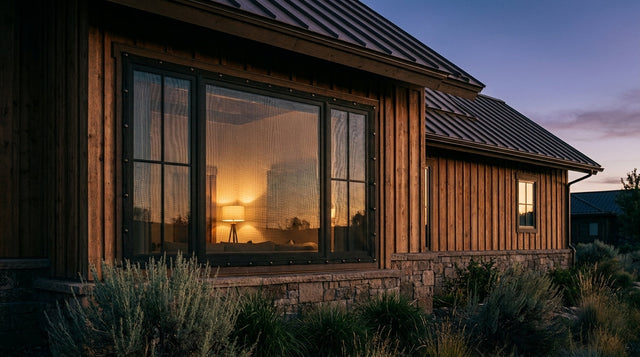
- Solar screens for windows are a woven exterior mesh mounted outside the glass that absorbs and reflects sunlight before it enters the room.
- The U.S. Department of Energy rates exterior shading the most effective way to reduce solar heat gain, ahead of interior blinds or window tint applied to the glass.
- Solar screens can block up to 90% of solar heat while remaining see-through, so a room stays cooler without going dark.
- Unlike window film, a solar screen sits off the glass, so it does not risk thermal stress on the pane or void a window warranty.
- Darker mesh rejects more heat and gives a clearer view out, while lighter mesh passes more daylight but blocks less heat.
Key Takeaways
- Solar screens are an exterior mesh that stops sunlight outside the glass, before it converts to trapped indoor heat.
- The U.S. DOE rates exterior shading the most effective window treatment for reducing solar heat gain — ahead of interior blinds or window tint.
- EZ-Snap® Sun Screen mesh in black blocks up to 90% of the sun's solar heat while preserving the outward view.
- EZ-Snap installs no-drill in an afternoon with household scissors; mesh is 6 ft wide and starts at $66.95.
Your blinds are closed, the A/C is roaring, and the room still feels like a greenhouse. The reason is simple physics: by the time sunlight hits an interior shade, the heat is already inside the glass. Solar screens for windows fix the problem at the only place it can actually be stopped — on the outside.
What Are Solar Screens for Windows?
Solar screens are an exterior mesh that mounts over the outside of your window, intercepting the sun before it ever reaches the glass.3 The mesh absorbs and re-radiates solar energy out in the open air, where it can dissipate — not in your living room. That single difference is why exterior screens cut cooling load where interior products can't.
Unlike interior blinds or window tint applied to the glass, which manage light that has already passed through the pane and converted into trapped heat, an exterior screen works on the front line — stopping radiation before it can become trapped indoor heat.
The U.S. Department of Energy is direct about the difference: exterior shading is the most effective way to reduce solar heat gain — more so than interior blinds or window tint.1 That isn't a marketing figure. It's the consequence of where the screen sits relative to the glass.
The Physics: Stopping Heat Before the Glass
To understand why exterior placement matters so much, picture what happens to a sunbeam at your window. Roughly speaking, solar radiation arrives, passes through the glass, and strikes whatever is behind it — floor, furniture, an interior blind. Those surfaces absorb the energy and re-emit it as longer-wave heat. Glass is transparent to incoming sunlight but largely opaque to that re-radiated heat, so it stays trapped. That's the greenhouse effect, and it's why a closed interior blind still leaves a room warm: the heat is already on the wrong side of the pane.
An exterior solar screen breaks the chain at the first link. By blocking the radiation before it crosses the glass, the energy never gets the chance to convert and become trapped. EZ-Snap Sun Screen mesh in black blocks up to 90% of the sun's solar heat while preserving your outward view — you still see the yard; the yard's heat just doesn't see you.
The cheapest way to cool a room is to never let the heat in. Once the sun crosses the glass, you're paying your A/C to undo physics.
Solar screen vs. window tint vs. interior blinds
- Interior blinds: manage glare and privacy, but the heat is already inside — minimal effect on cooling load.
- Window tint: applied to the glass surface, it helps, but it still lets the pane heat up and re-radiate inward.
- Exterior solar screens: stop the energy in open air, before the glass — which is why the DOE rates exterior shading the most effective option.
Why Exterior Mesh Is the Value Play
For DIYers and anyone staring down a summer A/C bill, the math is straightforward. Heat gain and loss through windows account for 25%–30% of residential heating and cooling energy use, so a screen that keeps that heat out reduces the load your air conditioner fights all afternoon — and screening every sun-facing opening turns that into a whole-home heat-control system.2 And because the mesh blocks heat without blocking the view, you don't trade your windows for a dark cave to get the savings.
There's a second, less obvious job exterior screens do well: defusing reflected-sun damage. When a neighbor's energy-efficient Low-E window catches the sun at the wrong angle, it has been known to concentrate a reflection onto nearby vinyl siding. It's a focused reflection, not ambient heat — and an exterior screen on the receiving window scatters that beam before it can do damage. It's the kind of problem most homeowners never see coming until the siding ripples.

How EZ-Snap Solar Screens Go Up
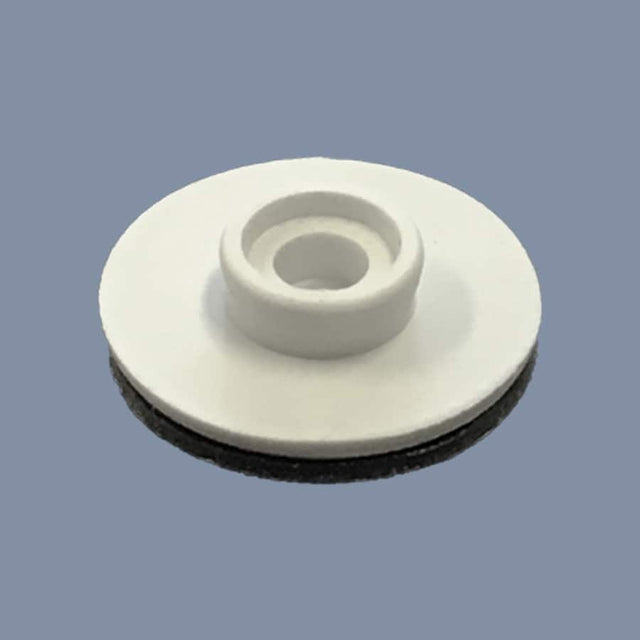
The reason most people never installed exterior shades is the old assumption that they require drilling, tracks, or a contractor. EZ-Snap removes that barrier. The system uses a patented no-drill Cap & Pin fastener backed by 3M™ VHB adhesive that bonds to glass, vinyl, fiberglass, aluminum, and gelcoat — about 60 seconds per stud, no holes left behind. The studs stay put permanently; the mesh snaps on and off, so you can pull the screens for more winter sun and re-snap them next spring. Most homeowners install it themselves in an afternoon.
- No drilling, no special tools — install in an afternoon with household scissors.
- Cut to length on site — mesh ships 6 ft wide across 19 sizes from 3 to 150 ft, starting at $66.95.
- Removable, not permanent — studs stay, screens come off seasonally.
Ready to plan your install? You can size your solar screen kit for your exact windows.
One timing note: the VHB adhesive needs roughly 60°F to cure and reaches full strength in about 72 hours, so warm-weather installs are easiest. If you're mounting in the cold, EZ-Snap supplies Screw and Combo studs that don't depend on adhesive temperature.
Factory-direct since 2006 and trusted by 38,000+ customers, EZ-Snap exterior shades carry a 4.9 rating across 592 reviews and a Limited Lifetime materials warranty — the difference between knowing what a solar screen is and finally having one stop the heat at your windows. Shop EZ-Snap Exterior Shades.
Sources
- "Exterior shutters and shades... are most effective at reducing solar heat gain." The page also states window awnings can reduce solar heat gain by up to 65% on south-facing windows and 77% on west-facing windows. U.S. Department of Energy (Energy Saver), 2024 ↗
- "Heat gain and heat loss through windows are responsible for 25%-30% of residential heating and cooling energy use." U.S. Department of Energy — Energy Saver, 2024 ↗
- "Exterior window attachments block solar heat before it reaches the window." Interior attachments "can be less effective at reducing heat gain than comparable exterior shading systems because they do not block direct sunlight until after it has already passed through the window." DOE Building America Solution Center (Pacific Northwest National Laboratory), 2023 ↗
Common questions
What are solar screens for windows?
Solar screens are an exterior mesh that mounts over the outside of a window and intercepts sunlight before it reaches the glass. Because the mesh absorbs and re-radiates solar energy out in open air, the heat never crosses the pane and gets trapped inside. That outside placement is what makes them more effective than interior shades at cutting cooling load.
Are solar screens better than window tint or interior blinds?
Yes. The U.S. Department of Energy rates exterior shading the most effective way to reduce solar heat gain, ahead of both interior blinds and window tint. Blinds and tint only manage light that has already passed through the glass and turned into trapped heat, while an exterior screen stops the radiation in open air before it ever gets inside.
How much heat do solar screens block?
EZ-Snap Sun Screen mesh in black blocks up to 90% of the sun's solar heat while still preserving your outward view. Since windows account for 25% to 30% of a home's heating and cooling energy use, screening sun-facing openings noticeably lightens the load your air conditioner fights all afternoon.
Do exterior solar screens block your view?
No. The mesh blocks heat without blocking the view, so you still see the yard clearly from inside. You get the cooling savings without turning the room into a dark cave, which is a common drawback of heavier shades or dark tint.
Do you have to drill holes to install solar screens?
No. EZ-Snap uses a patented no-drill Cap and Pin fastener backed by 3M VHB adhesive that bonds to glass, vinyl, fiberglass, aluminum, and gelcoat in about 60 seconds per stud, leaving no holes behind. Most homeowners install the screens themselves in an afternoon using household scissors to cut the mesh to length.
How much do exterior solar screens cost?
EZ-Snap solar screen mesh starts at $66.95. It ships 6 feet wide across 19 sizes ranging from 3 to 150 feet, and you cut it to length on site for your exact windows. The system is factory-direct since 2006 and backed by a Limited Lifetime materials warranty.