Exterior Skylight Covers at Home Depot: What to Know Before You Buy

Key Takeaways
- Skylights are among a home's worst heat-gain sources: a square foot of roof can absorb three to four times the solar radiation of a square foot of wall on a midsummer day.
- The U.S. Department of Energy states exterior shades reduce summer heat gain more effectively than interior shades, because they block sunlight before it passes through the glass.
- Exterior solar screens can block up to 90% of solar heat gain before it reaches the window, depending on the mesh material.
- Most big-box skylight products are interior shades that darken a room rather than stop heat; true exterior, custom-fit covers are a smaller slice of the market.
- A no-drill, cut-to-fit exterior shade kit fits odd skylight shapes with scissors and 3M VHB adhesive, with EZ-Snap® kits starting at $66.95.
Type "exterior skylight covers home depot" into a search bar and you can almost feel the hope behind it: a hot upstairs room, a glaring afternoon, and the reasonable assumption that the nearest big-box store has a part on a shelf that fixes it. The trouble is the hardware-store aisle was built for windows you can reach, not for glass mounted on your roof.
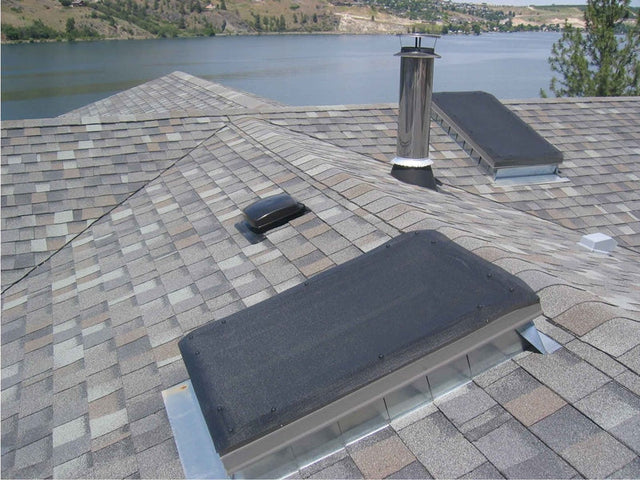
That distinction matters more than the marketing lets on. A skylight is, thermally, one of the most punishing pieces of glass in your house. One square foot of roof can absorb roughly three to four times as much solar radiation on a midsummer day as a square foot of north- or south-facing wall.1 So when you go shopping for a cover, you are not solving a decorating problem. You are solving a roof problem.
What the Home Depot aisle actually stocks
Walk the window-treatment section and most of what you will find for skylights faces inward: cellular skylight shades on tracks, blackout panels, motorized interior blinds sized to a handful of standard openings. These are real products and they do dim a room. What they mostly do not do is stop heat before it arrives.
That is the catch the search term hides. The Department of Energy is blunt about it: because skylights sit on the roof, they add unwanted summer heat, and exterior shades are more effective than interior shades at reducing that heat gain.2 An interior blind can only react after sunlight has already passed through the glass and turned into heat inside your house.5 By then the room is already warming. If you are weighing the two head to head, it is worth reading why skylight blinds rarely stop the heat the way exterior shades do before you commit to either.
Genuinely exterior skylight covers are a thinner slice of the market. You will find rigid acrylic domes, hail guards, and weatherproof covers meant to seal an opening shut. They are built to protect glass, not to shade it while you still want daylight, and they rarely come sized to your exact curb.
You are not buying a window treatment. You are buying a way to keep the roof from cooking the room beneath it.
Why "exterior" is the word that matters
The physics here is settled and worth understanding before you spend a dollar. The fraction of solar radiation a skylight lets through is its solar heat gain coefficient, or SHGC; the lower that number, and the more shading you add, the less heat comes through.3 You can lower the effective number two ways: replace the glass, or block the sun before it touches the glass.
Replacement is expensive and disruptive. Shading is neither — if you put it on the right side. The DOE names exterior shutters and shades as the most effective option for reducing solar heat gain, precisely because they intercept sunlight outside the glass.4 An exterior solar screen, depending on the mesh, has the potential to block up to 90% of solar heat gain before it ever reaches the window.6 An interior shade, however handsome, is always playing defense after the heat is already in the house.
Lined up against each other, the options a skylight shopper actually faces sort out quickly:
| Option | Solar heat blocked | No-drill install | Keeps daylight | Fits odd shapes | Relative cost |
|---|---|---|---|---|---|
| Interior blinds / blackout shades (the aisle) | Limited — heat already inside | Varies | No (blackout) | No | $$ |
| Rigid exterior domes / hail guards | — | No | No | No | $$$ |
| EZ-Snap exterior solar mesh (black) | Up to 90% | Yes | Yes | Yes | $ |
| EZ-Snap exterior solar mesh (white) | Yes — more daylight | Yes | Yes | Yes | $ |
This is the gap between what the search intent wants and what the big-box shelf delivers. The shopper wants a cooler room. The aisle mostly offers a darker one.
Where to buy exterior skylight covers that fit your glass
If your skylights are anything but a perfect rectangle in a catalog size — and most are not, between tubular wells, fixed domes, trapezoids, and odd custom curbs — pre-sized covers stop being an option fast. This is the practical reason the hardware-store route stalls: the cover has to match the curb, and roofs do not come in standard sizes.
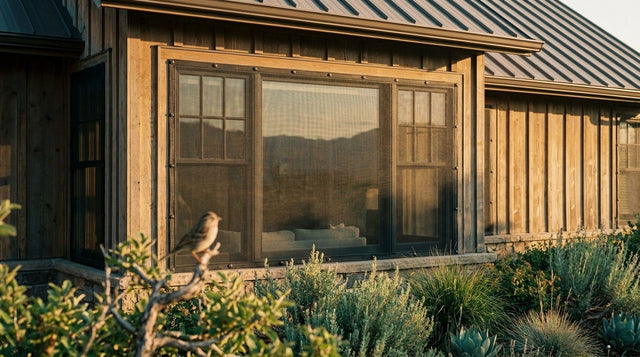
A cut-to-fit exterior shade kit sidesteps the whole sizing problem. The Shop Skylight Shades approach uses one mesh material you trim to the actual shape of your opening, so a round tube and a rectangular curb get the same kit. The EZ-Snap Sun Screen uses an Optical Grade Thermo-Weave™ mesh in black that blocks up to 90% of solar heat, or in white for more daylight with less heat rejection. If you want a closer look at how the weave itself performs, the guide to skylight screens and mesh covers walks through blocking heat while keeping the view.
Three things make it work on a roof where a drill is a liability:
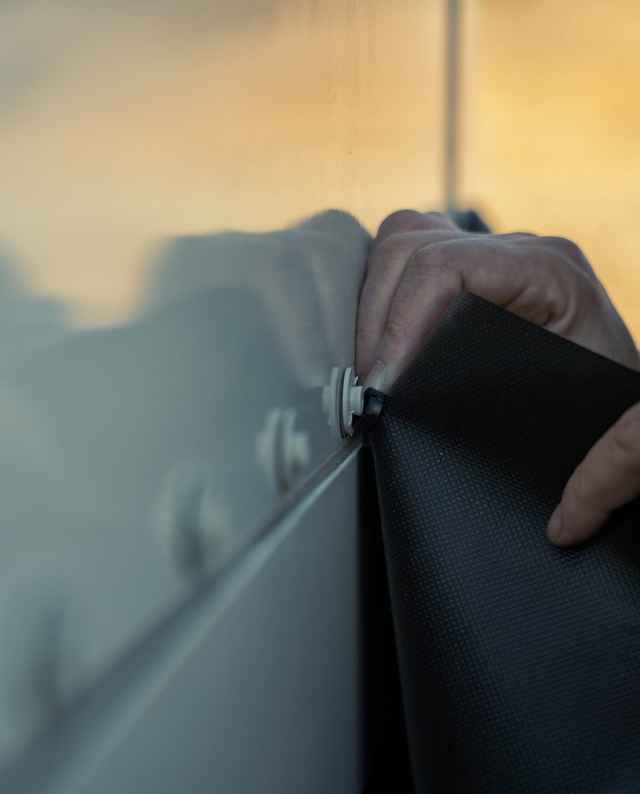
- No-drill mounting. A patented Cap & Pin snap rides on 3M VHB adhesive — no holes through your roof or flashing. The tape reaches full strength in about 72 hours, takes roughly 60 seconds per stud, and wants a surface near 60°F to cure.
- Custom-cut, non-fray mesh. You cut the screen to any shape with scissors; the weave does not unravel at the edge, so trapezoids and tubes are no harder than squares.
- An afternoon, not a contractor. A typical install is a same-day job with hand tools, which is the part a rooftop product usually fails at. The full walkthrough on how to cover a skylight from the outside covers the no-drill steps in order.
Kits start at $66.95, with free shipping over $225 — in the neighborhood of a good interior skylight blind, but doing the job on the correct side of the glass.
How to choose without overbuying
Before you check out anywhere, sort your need into one of two buckets. If you want the room dark — a nursery, a media space — an interior blackout shade is fine, and the aisle has those. If you want the room cooler while keeping daylight and the view, you want exterior shade, and you want it sized to your glass.
A few honest questions to settle first:
- What is the exact shape and size of the opening? Measure the glass, not the interior light well. Odd shapes rule out most boxed covers.
- Black mesh or white? Black rejects the most heat; white keeps more brightness.
- Can you safely reach the skylight from outside? Exterior shading only helps if installation is realistic for your roof.
The same logic that governs skylights governs the rest of your sun-facing glass, which is why a kit-based system scales across an elevation. Homeowners who solve a skylight this way often move on to exterior shades for the west-facing windows that bake every afternoon, or read up on how the no-drill system works before committing. The principle never changes: stop the heat outside.
The bottom line on the Home Depot route
There is nothing wrong with starting your search at a national retailer — it is where most people begin, and the brand has built EZ-Snap kits since 2006 for more than 38,000 customers, all backed by a Limited Lifetime materials warranty, so we are not anti-store. We are pro-physics.
If a boxed interior shade in a standard size genuinely fits your opening and you only want the room darker, buy it and be happy. But if your goal is a cooler room — and for a roof-mounted piece of glass that is usually the real goal — the search term is steering you toward the wrong shelf. Exterior, custom-cut, no-drill shading is the version that matches both the building science and the shape of your actual skylight.2
Sources
- One square foot of roof area can receive approximately three to four times as much solar radiation on a midsummer day as one square foot of north- or south-facing wall. Pacific Northwest National Laboratory (Building America Solution Center, U.S. DOE), 2024 ↗
- Because skylights are located on the roof, they can result in unwanted additional heat in summer... Exterior shades will be more effective than interior shades at reducing heat gain in summer. U.S. Department of Energy, Office of Energy Saver, 2024 ↗
- Solar heat gain coefficient (SHGC) is the fraction of solar radiation admitted through a window, door, or skylight... The lower the SHGC, the less solar heat it transmits, and the greater its shading ability. U.S. Department of Energy, Office of Energy Saver, 2024 ↗
- "Exterior shutters and shades... are most effective at reducing solar heat gain." The page also states window awnings can reduce solar heat gain by up to 65% on south-facing windows and 77% on west-facing windows. U.S. Department of Energy (Energy Saver), 2024 ↗
- "Exterior window attachments block solar heat before it reaches the window." Interior attachments "can be less effective at reducing heat gain than comparable exterior shading systems because they do not block direct sunlight until after it has already passed through the window." DOE Building America Solution Center (Pacific Northwest National Laboratory), 2023 ↗
- "Depending on the material used, solar screens have the potential to block up to 90% of solar heat gain before it even reaches the window." U.S. Department of Energy, Office of Energy Efficiency & Renewable Energy (EERE), 2023 ↗
Common questions
Does Home Depot sell exterior skylight covers that block heat?
Most skylight products on big-box shelves are interior shades that darken a room rather than exterior covers that stop heat. The genuinely exterior options you find, like rigid acrylic domes and hail guards, are built to seal or protect glass, not to shade it while keeping daylight, and they rarely come sized to your exact curb. For a cooler room you want an exterior, cut-to-fit shade instead.
Are exterior or interior skylight shades better for blocking heat?
Exterior shades reduce summer heat gain more effectively because they block sunlight before it passes through the glass. An interior blind can only react after the sun has already entered and turned into heat inside the room. The U.S. Department of Energy names exterior shutters and shades as the most effective option for reducing solar heat gain.
How much heat can an exterior skylight cover block?
Exterior solar screens can block up to 90% of solar heat gain before it reaches the window, depending on the mesh material. EZ-Snap's black Optical Grade Thermo-Weave mesh blocks up to 90%, while the white version keeps more daylight with less heat rejection. Either way, the heat is stopped on the outside of the glass.
How do you cover an odd-shaped skylight without drilling?
A cut-to-fit exterior shade kit uses one mesh you trim with scissors to any shape, so a round tube and a rectangular curb take the same kit. It mounts on a patented no-drill Cap and Pin snap riding on 3M VHB adhesive, with no holes through your roof or flashing. The weave does not unravel at the cut edge, so trapezoids and tubes are no harder than squares.
How much do exterior skylight shade kits cost?
Kits start at $66.95, with free shipping over $225. That is in the neighborhood of a good interior skylight blind, but it does the job on the correct, outer side of the glass. The tape reaches full strength in about 72 hours and takes roughly 60 seconds per stud to place.
Should I choose black or white skylight mesh?
Choose black mesh to reject the most heat and white mesh to keep more daylight. Black blocks up to 90% of solar heat while preserving a clear view, which makes it the pick for the hottest rooms. White lets in more brightness with less heat rejection.