Skylight Blinds vs. Exterior Skylight Shades: Which Actually Stops the Heat?

Key Takeaways
- A skylight can receive three to four times the solar radiation of a wall window, making overhead glass the hottest glazing in most homes.
- Interior skylight blinds trap heat between the glass and the fabric, re-radiating it into the room after the sun has already entered.
- The U.S. Department of Energy states exterior shading is more effective than interior treatments because it blocks solar heat before it reaches the window.
- Depending on the mesh, exterior solar screens can block up to 90% of solar heat gain before it reaches the glass.
- Interior blinds win for glare and privacy; exterior shades win for stopping heat at its source.
Stand under a skylight on a cloudless July afternoon and you can feel the decision being made above your head: the sun has already arrived, and the only question left is where its heat gets trapped. Most people answer that question by shopping for skylight blinds — and that is where the trouble starts, because by the time a blind goes to work, the heat is already in the room.
Search volume tells the same story everywhere. People type "skylight blinds" into a box, picture a tidy interior shade gliding shut, and assume the problem is solved. It is an understandable instinct. It is also, on the physics, the wrong end of the glass.
Skylight blinds or exterior skylight shades — which actually stops the heat?
Exterior skylight shades stop far more heat than interior blinds. An exterior mesh intercepts solar radiation outside the glass, blocking up to 90% of solar heat before it enters. An interior blind only absorbs and re-radiates heat that has already passed through the glass, so the room is already warming. For heat, outside wins.
Why a skylight is the hottest piece of glass in the house
A wall window catches the sun at an angle for part of the day. A skylight faces the sky directly, taking the full overhead load when the sun is highest and hottest. According to the U.S. Department of Energy's building research lab, one square foot of roof area can receive roughly three to four times as much solar radiation on a midsummer day as a square foot of north- or south-facing wall.1 That is not a rounding error. That is a furnace pointed straight down.
The DOE is blunt about the consequence: because skylights sit on the roof, they "can result in unwanted additional heat in summer."2 The amount of solar heat any glazing lets through is captured by a single rating, the Solar Heat Gain Coefficient (SHGC) — the fraction of solar radiation admitted through a window, door, or skylight. The lower the SHGC, the less heat transmitted, and the greater the shading ability.3 A skylight, unshaded, is working against you on exactly that number.
The greenhouse you build with interior skylight blinds
Here is the part the product photos never show. When sunlight passes through the glass and strikes an interior blind, the blind absorbs that energy and re-radiates it as heat — on the room side of the window. You have built a miniature greenhouse in the gap between the glass and the fabric. The light got in; now the heat is trapped, and the blind is broadcasting it into the space you wanted to cool.
The DOE's window research makes the mechanism explicit: interior attachments "can be less effective at reducing heat gain than comparable exterior shading systems because they do not block direct sunlight until after it has already passed through the window."5 An exterior attachment, by contrast, "block[s] solar heat before it reaches the window."5
A blind can only manage heat that has already arrived. A screen can stop it from arriving at all.
This is the whole argument in one sentence, and it is why the popular search term quietly leads people toward the weaker fix. Interior skylight blinds are a fine answer to glare and a fine answer to privacy. They are a poor answer to a roof that is absorbing three to four times the wall's solar load.
Skylight blinds vs shades: where each one actually wins
It helps to separate the two jobs people are really asking a skylight covering to do.
| Option | Solar heat blocked | Stops heat before the glass | No-drill install | Relative cost |
|---|---|---|---|---|
| EZ-Snap® exterior mesh (black) | Up to 90% | Yes | Yes | $$ |
| EZ-Snap exterior mesh (white) | Less — more light through | Yes | Yes | $$ |
| Interior skylight blind | Limited — heat already inside | No | — | $ |
| Motorized interior shade | Limited — heat already inside | No | No | $$$ |
- Light and glare control, from inside: interior blinds and shades win here. They are easy to reach, easy to adjust, and they dim a too-bright room on demand.
- Heat control, before it enters: exterior shading wins, and it is not close. The DOE names exterior shades among the treatments "most effective at reducing solar heat gain."4
- Energy load over a season: exterior screens reduce the cooling work your system has to do, because they shrink the heat gain at its source rather than fighting it indoors — the savings case we lay out in our look at cutting cooling costs from the outside.
If your only complaint is brightness at noon, a skylight window blind is a reasonable purchase. If your complaint is a room that becomes uninhabitable in August — the one most people actually have — you are shopping in the wrong aisle. The honest framing of skylight blinds vs shades is that they are answering different questions, and only one of them answers the heat question well.
What exterior shading does that no interior blind can
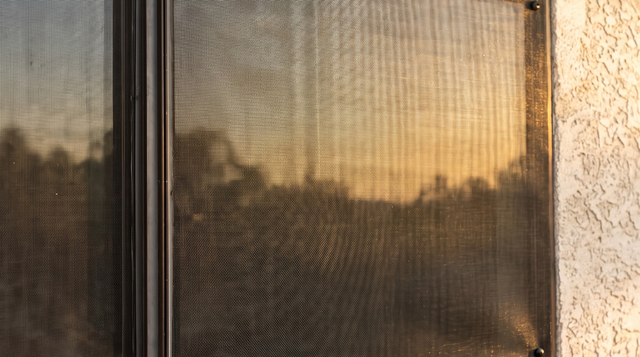
The reason exterior screens stop heat so well is that the right mesh intercepts solar radiation outside the glass, where the absorbed energy can shed back into open air instead of into your living room. The DOE notes that depending on the material, solar screens "have the potential to block up to 90% of solar heat gain before it even reaches the window."6 It is the same logic behind any well-built skylight screen or mesh cover: block the heat, keep the view.
EZ-Snap builds its exterior shades around that principle. The Sun Screen kit uses an Optical Grade Thermo-Weave™ mesh: the black weave blocks up to 90% of solar heat, while a white weave lets more light through for spaces where you want brightness without the full thermal load. You see out; the sun mostly doesn't get in. For overhead glazing specifically, that is the difference between a room you avoid and a room you use.
A no-drill install that doesn't void your roof
The usual objection to exterior shading is the one nobody says out loud: you are not thrilled about drilling holes near a skylight. EZ-Snap's patented Cap & Pin snap system mounts with 3M™ VHB adhesive — no drilling into the frame or flashing. The VHB reaches roughly 60 seconds of placement per stud, cures around 60°F, and reaches full strength in about 72 hours. The mesh cuts to any window shape with scissors, doesn't fray, and most installs wrap up in an afternoon. If you want the step-by-step, our walkthrough on how to cover a skylight from the outside covers it. Compared to a motorized interior unit, it is a quieter, lower-tech, lower-risk path to the result that actually matters.
Choosing the right fix for your skylight
Walk the decision backward from the symptom. Too bright? An interior blind solves glare cheaply. Too hot — the real reason most people land on this page — and the fix lives on the outside of the glass, because that is the only place you can stop solar heat before it becomes room heat.
If you want the deeper buyer's view, our guide to Shop Skylight Shades walks through mesh color, sizing, and which kit fits which opening, and how it works shows the snap system in motion. EZ-Snap has shaded glazing this way since 2006 for more than 38,000 customers, with a Limited Lifetime materials warranty and a no-drill motorized skylight blinds alternative that doesn't put a motor — or a hole — anywhere near your roof. Kits start at $66.95, with free shipping over $225.
The blind was never the problem. The location was. Move the shade to the right side of the glass, and the August skylight stops being something you dread and goes back to being what it was supposed to be: a hole in your roof that lets in light, not heat.
Sources
- One square foot of roof area can receive approximately three to four times as much solar radiation on a midsummer day as one square foot of north- or south-facing wall. Pacific Northwest National Laboratory (Building America Solution Center, U.S. DOE), 2024 ↗
- Because skylights are located on the roof, they can result in unwanted additional heat in summer... Exterior shades will be more effective than interior shades at reducing heat gain in summer. U.S. Department of Energy, Office of Energy Saver, 2024 ↗
- Solar heat gain coefficient (SHGC) is the fraction of solar radiation admitted through a window, door, or skylight... The lower the SHGC, the less solar heat it transmits, and the greater its shading ability. U.S. Department of Energy, Office of Energy Saver, 2024 ↗
- "Exterior shutters and shades... are most effective at reducing solar heat gain." The page also states window awnings can reduce solar heat gain by up to 65% on south-facing windows and 77% on west-facing windows. U.S. Department of Energy (Energy Saver), 2024 ↗
- "Exterior window attachments block solar heat before it reaches the window." Interior attachments "can be less effective at reducing heat gain than comparable exterior shading systems because they do not block direct sunlight until after it has already passed through the window." DOE Building America Solution Center (Pacific Northwest National Laboratory), 2023 ↗
- "Depending on the material used, solar screens have the potential to block up to 90% of solar heat gain before it even reaches the window." U.S. Department of Energy, Office of Energy Efficiency & Renewable Energy (EERE), 2023 ↗
Common questions
Do skylight blinds or exterior shades actually stop the heat?
Exterior skylight shades stop far more heat than interior blinds. An exterior mesh intercepts solar radiation outside the glass, blocking up to 90% of solar heat before it enters. An interior blind only absorbs and re-radiates heat that has already passed through the glass, so the room is already warming. For heat, the outside wins.
Why does a skylight make a room so much hotter than a regular window?
A skylight faces the sky directly and takes the full overhead load when the sun is highest. According to U.S. Department of Energy research, one square foot of roof can receive roughly three to four times as much solar radiation on a midsummer day as a square foot of wall. That makes overhead glass the hottest glazing in most homes.
Do interior skylight blinds keep a room cooler?
Interior skylight blinds do little to keep a room cool because the heat is already inside by the time they act. Sunlight passes through the glass, strikes the blind, and gets re-radiated as heat on the room side, creating a small greenhouse in the gap. Blinds are a good answer for glare and privacy, not for heat.
Can you install exterior skylight shades without drilling into the roof?
Yes, exterior skylight shades can be installed with no drilling into the frame or flashing. EZ-Snap uses a patented Cap and Pin snap system mounted with 3M VHB adhesive: about 60 seconds to place each stud, a cure around 60 degrees, and full strength in roughly 72 hours. The mesh trims to any shape with scissors.
When should you choose interior blinds over exterior shades?
Choose interior blinds when your only complaint is brightness or glare at midday, since they are easy to reach and adjust from inside. Choose exterior shades when the real problem is a room that becomes too hot in summer, because only outside shading stops solar heat before it becomes room heat. They answer different questions.
How much solar heat can exterior skylight mesh block?
Black exterior mesh can block up to 90% of solar heat before it reaches the glass. EZ-Snap's Sun Screen uses an Optical Grade Thermo-Weave mesh, with the black weave built for maximum heat rejection and a white weave that lets more light through for spaces where you want brightness. Kits start at $66.95, with free shipping over $225.