Outdoor Window Coverings That Actually Block the Sun (Not Just Decorate)

- Outdoor window coverings stop solar heat outside the glass, which is why they outperform any interior blind, shade or film at keeping a room cool.
- The Department of Energy states exterior window attachments block solar heat before it reaches the glass, while interior treatments act only after sunlight passes through.
- Exterior solar screen mesh stops the most heat of any outdoor covering: depending on material, up to 90% of solar heat gain before it reaches the window.
- Awnings, exterior roller shades, shutters and solar screens all work outside the glass, but only mesh screens preserve the view while blocking that heat.
- Heat gain and loss through windows account for 25% to 30% of a home's heating and cooling energy use, per the Department of Energy.
Key Takeaways
- The Department of Energy identifies exterior shading as the most effective way to reduce solar heat gain, because it blocks sunlight before it reaches the glass.
- Exterior solar screen mesh can block up to about 90% of solar heat gain before it reaches the window, depending on material; EZ-Snap®'s black Optical Grade Thermo-Weave mesh blocks up to 90% of the sun's heat.
- Window awnings can cut solar heat gain by up to 65% on south-facing windows and up to 77% on west-facing windows, but low-angle sun slips under them.
- Windows drive 25 to 30 percent of residential heating and cooling energy use, making the glass a major cooling load rather than a minor detail.
- Interior blinds are structurally limited because they only act after sunlight has already passed through the glass and become indoor heat.
Most outdoor window coverings are sold on looks, but the sun does not care how a covering photographs — it cares whether anything stands between the glass and a star burning eight light-minutes away. That distinction is the whole game, and it is where most shopping for outdoor window coverings goes quietly wrong.
Walk a home-improvement aisle and you will find the word "shade" attached to things that barely shade. The honest question is not which option looks best on a south wall at golden hour. It is which one intercepts solar energy before it ever touches your glass, because once sunlight passes through the pane, the heat is already inside and your air conditioner inherits the bill. So let us rank outdoor window coverings the way physics ranks them — by heat stopped, not by curb appeal.
Why "outside the glass" is the only ranking that matters
Start with the load. Heat gain and loss through windows account for 25 to 30 percent of residential heating and cooling energy use, which means the window is not a detail of your comfort — it is a quarter of the problem.4 Researchers go further and call windows the weakest link in a building's thermal envelope: roughly eight percent of the envelope's area, yet responsible for a wildly outsized share of the heat that moves in and out.7
Here is the mechanism that decides every ranking below. The Solar Heat Gain Coefficient is the fraction of solar radiation a window admits — transmitted directly or absorbed and then re-released as heat inside the room.5 A covering that lives on the inside of the glass is fighting energy that has already crossed the threshold. The Department of Energy says it plainly: exterior attachments block solar heat before it reaches the window, while interior treatments are less effective because they do not stop direct sunlight until after it has passed through the glass.2
Inside the glass, you are mopping up heat. Outside the glass, you never let it in.
The ranking, from most sun blocked to least
With the physics settled, the field sorts itself. These are the real exterior window coverings to block sun, in order of how much heat they actually stop.
1. Exterior solar screen mesh — the heat-first choice
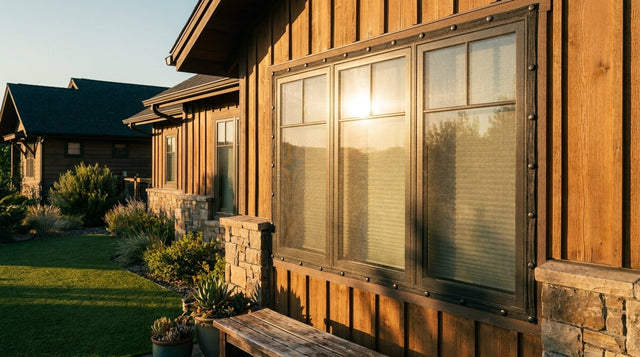
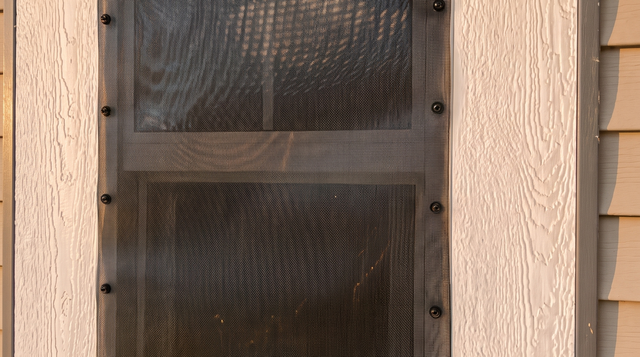
A fine exterior mesh stretched outside the window is the rare covering engineered around the SHGC problem rather than around decoration. The DOE notes that, depending on material, solar screens can block up to about 90 percent of solar heat gain before it even reaches the window.3 The EZ-Snap Sun Screen is built on exactly this principle: its Optical Grade Thermo-Weave™ mesh in black blocks up to 90% of the sun's heat while you keep your view out. White mesh trades some of that heat rejection for brighter, softer daylight. If you want the full picture of how a fine weave intercepts solar energy, our breakdown of how shade screens actually work and how much heat they really block walks through the mechanism. You can see how the system stretches across our no-drill install, and the kits start at $66.95. When you are ready, you can configure a custom exterior shade kit to fit your own windows.
2. Awnings — strong on the right elevations
A well-placed awning is genuinely effective. The DOE credits window awnings with reducing solar heat gain by up to 65 percent on south-facing windows and up to 77 percent on west-facing windows.1 The catch is geometry: an awning shades by overhang angle, so it shines on south and west exposures and on high sun, but a low morning or evening sun slides right underneath it. It covers the window opening, not the glass plane, so partial-day gaps are the rule, not the exception.
3. Exterior shutters — effective when closed, dark when closed
Operable exterior shutters are listed by the DOE among the treatments most effective at reducing solar heat gain.6 The honest footnote: that performance assumes you close them, and closing them trades your daylight and your view for a dim room. They are a heat tool and a security tool first, an everyday-living tool second.
4. Decorative outside window coverings — looks, not load
Bamboo roll-ups, fabric outdoor curtains, and the bulk of Pinterest-style exterior window covering ideas belong here. They soften a façade and they will dapple some light, but none are engineered to a heat-rejection number, and most foul, fade, or flap in real weather. Treat them as styling, not as climate control.
Where interior blinds actually land
Interior blinds and cellular shades are not useless — a reflective interior shade can cut some gain — but they are structurally handicapped. By the time light reaches them it is already inside, and the heat they absorb radiates into the room.2 If you are weighing the two directly, our look at outdoor window blinds versus exterior shade mesh spells out which one survives the sun, wind, and time. And if you only remember one line from any list of the best outdoor window coverings, make it this: the sun does not negotiate once it is through the glass.
How to choose for your house
- Chasing the lowest AC bill? Lead with exterior solar screen mesh on your hottest exposures — west and south first. It is the heat-first answer and the most flexible to install.
- Want a fixed architectural look? Awnings on south and west windows are a defensible second, accepting the low-angle gaps.
- Need full blackout or storm closure? Exterior shutters, understanding you give up the view when they are doing their job.
- Just restyling a patio? Decorative coverings are fine — just do not expect them to move your thermostat.
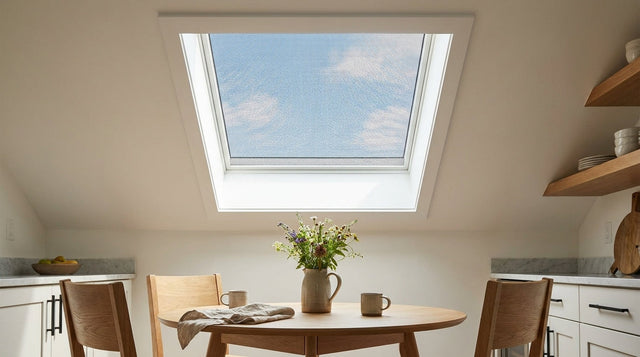
EZ-Snap has been building exterior shade systems since 2006 and has served more than 38,000 customers, and the same patented no-drill snap-on system that installs in an afternoon carries across the lineup — from RV exterior shades to skylight shade kits that tame the worst overhead-sun rooms in the house. The mesh cuts to any window shape with scissors, will not fray, and the whole job is an afternoon's work.
For the full range of sizes, colors, and mounting hardware, Browse Exterior Shade Kits and match the mesh to the windows that bake the hardest. Rank by heat, not by looks, and your outdoor window coverings will finally do the one job the brochure forgot to mention.
Sources
- "Exterior shutters and shades... are most effective at reducing solar heat gain." The page also states window awnings can reduce solar heat gain by up to 65% on south-facing windows and 77% on west-facing windows. U.S. Department of Energy (Energy Saver), 2024 ↗
- "Exterior window attachments block solar heat before it reaches the window." Interior attachments "can be less effective at reducing heat gain than comparable exterior shading systems because they do not block direct sunlight until after it has already passed through the window." DOE Building America Solution Center (Pacific Northwest National Laboratory), 2023 ↗
- "Depending on the material used, solar screens have the potential to block up to 90% of solar heat gain before it even reaches the window." U.S. Department of Energy, Office of Energy Efficiency & Renewable Energy (EERE), 2023 ↗
- "Heat gain and heat loss through windows are responsible for 25%-30% of residential heating and cooling energy use." U.S. Department of Energy — Energy Saver, 2024 ↗
- SHGC is "the fraction of solar radiation admitted through a window, door, or skylight — either transmitted directly and/or absorbed, and subsequently released as heat inside a home"; a low-SHGC product "is more effective at reducing cooling loads during the summer by blocking heat gain from the sun." U.S. Department of Energy — Energy Saver, 2024 ↗
- Exterior shutters and shades "are most effective at reducing solar heat gain," and exterior awnings can "reduce solar heat gain in the summer by up to 65% on south-facing windows and 77% on west-facing windows." U.S. Department of Energy — Energy Saver, 2024 ↗
- Windows "are known as the weakest link in the thermal envelopes" and are "attributable for approximately 10% of building energy use"; though only ~8% of envelope area, they can contribute "up to 45% of the envelope heat loss" in climate zones 4 and 5. Lawrence Berkeley National Laboratory — Windows & Daylighting, 2023 ↗
Common questions
What outdoor window covering blocks the most sun?
Exterior solar screen mesh blocks the most, because it intercepts sunlight outside the glass before it becomes indoor heat. Depending on the material, solar screens can block up to about 90% of solar heat gain before it reaches the window, and EZ-Snap's black Optical Grade Thermo-Weave mesh blocks up to 90% while you keep your view out.
Why are exterior coverings better than interior blinds for blocking heat?
Because they stop solar heat before it reaches the glass, while interior treatments only act after sunlight has already passed through and become heat inside the room. The Department of Energy identifies exterior shading as the most effective way to reduce solar heat gain. As the article puts it, outside the glass you never let the heat in.
How much do awnings reduce solar heat gain?
Window awnings can cut solar heat gain by up to 65% on south-facing windows and up to 77% on west-facing windows, per the Department of Energy. The catch is geometry: an awning shades by overhang angle, so a low morning or evening sun slides right underneath it, leaving partial-day gaps.
How much of a home's energy use comes from windows?
Heat gain and loss through windows account for 25 to 30 percent of residential heating and cooling energy use. That makes the glass a major cooling load rather than a minor detail. Researchers call windows the weakest link in a building's thermal envelope: roughly eight percent of its area, yet responsible for an outsized share of heat movement.
Do decorative outdoor coverings like bamboo roll-ups reduce heat?
No, decorative coverings are styling, not climate control. Bamboo roll-ups, fabric outdoor curtains, and similar ideas soften a facade and dapple some light, but none are engineered to a heat-rejection number, and most foul, fade, or flap in real weather. Treat them as looks, not load.
How much do exterior shade kits cost?
EZ-Snap exterior shade kits start at $66.95. The mesh cuts to any window shape with scissors and will not fray, installs with a patented no-drill snap-on system, and the whole job is an afternoon's work. The lineup runs from custom home window kits to RV and skylight shades.