Snap Shades Explained: The No-Drill Window Shade System That Installs in an Afternoon

Key Takeaways
- Snap shades are exterior solar screens held on by a patented no-drill Cap & Pin snap plus 3M VHB tape, so installation leaves no holes in your window frame.
- The system is two parts: the EZ Snap Sun Screen kit (hardware) and Optical Grade Thermo-Weave mesh (the shading material); black mesh blocks up to 90% of solar heat.
- Exterior shading is the most effective way to reduce solar heat gain because it blocks the sun before it reaches the glass, unlike interior blinds.
- Heat gain and loss through windows account for roughly 25 to 30 percent of residential heating and cooling energy use.
- The mesh cuts to any window shape with scissors and won't fray, and the VHB bond reaches full strength in about 72 hours, making install a one-afternoon job.
Walk up to a window with a pair of household scissors, a tube of adhesive, and a roll of black mesh, and within an afternoon you can change how a room behaves in the heat. That is the quiet promise behind snap shades: no drill, no studs, no installer, no holes left in the wall when the season turns.
The phrase "snap shades" gets used loosely, so let's be precise about what it actually describes. It's an exterior solar screen held to the outside of a window by a patented snap, not a roller blind, not an interior curtain, not a film stuck to the glass. The whole idea rests on a small mechanical fact that most people never get to see up close, so that's where we'll start.
What a snap shade actually is
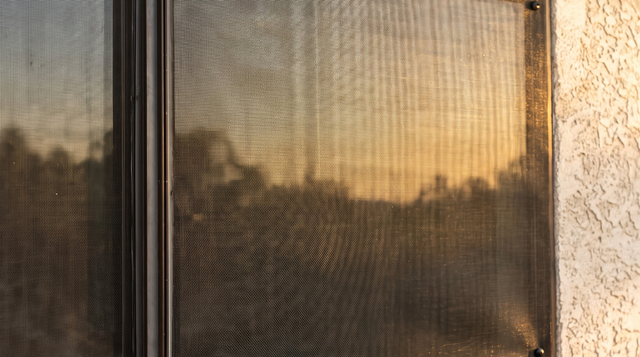
A snap shade is two things working together: a kit and a material. The kit is the EZ Snap® Sun Screen — the fasteners, the trim, the hardware that holds everything to your window frame. The material is Optical Grade Thermo-Weave™, a tight exterior mesh you can see through from the inside while it stops the sun on the outside. People conflate the two because the brand name lives on both, but the distinction matters when you're shopping: you choose a kit sized to your windows, and the mesh is what does the shading.
Black mesh is the heat-stopping choice — it blocks up to 90% of the solar heat that would otherwise hit your glass. White mesh trades some of that heat rejection for more transmitted daylight, so it's the pick when a room feels cave-dark with black. If you want the full breakdown of how shade screens work and how much heat they really block, the mesh weave is where it all happens. The mesh cuts to any window shape with scissors and won't fray at the edge, which is why arched, trapezoidal, and oddball windows aren't a problem the way they are for rigid panel systems.
The Cap & Pin snap, up close
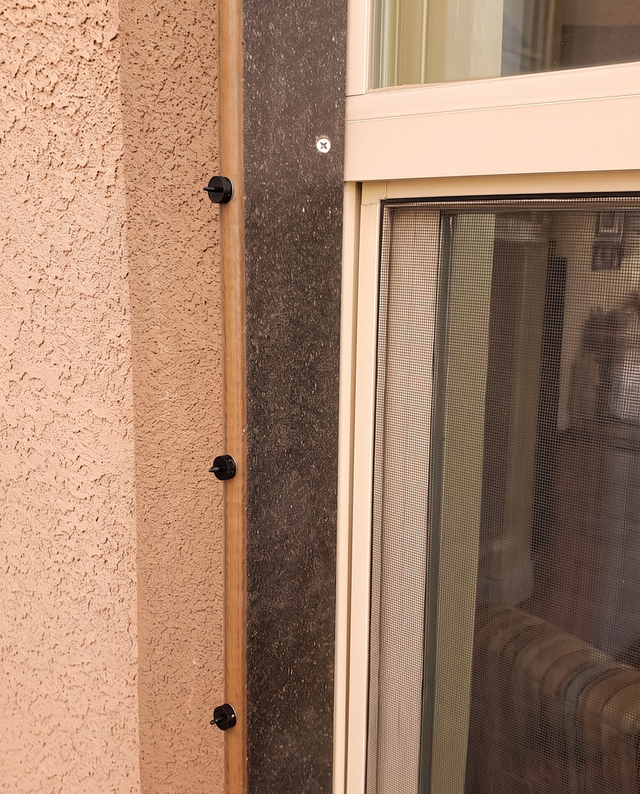
Here's the mechanism the whole category is named for. Instead of drilling pilot holes and threading screws into your frame, EZ Snap uses a patented no-drill Cap & Pin snap. A small pin base bonds to the window frame; the mesh slips over it; a cap snaps down and locks the fabric in place — the same satisfying click as a jacket snap, scaled for a building.
What holds the pin to the frame is industrial 3M™ VHB tape — the same family of double-sided acrylic bonding 3M uses in automotive and architectural assembly. It needs roughly a 60°F surface to cure, grabs in about 60 seconds per stud as you press it down, and reaches full strength in about 72 hours. So the install is fast, but you give the bond a few warm days before you trust it against a windstorm. No drill bit ever touches your siding or trim.
No holes, no studs, no installer — the snap does the work a drill used to, and leaves nothing behind when you take it down.
That "leaves nothing behind" part is underrated. Because the system is adhesive-and-snap rather than drilled-and-screwed, these are genuinely no drill window shades — renters, HOA-bound homeowners, and RV owners who can't put permanent holes in a coach all land here for the same reason.
Why shade the outside of the glass
This is the part that makes the whole approach worth the trouble. Windows are the thermal weak link of almost any building — though glass is only a small fraction of the wall area, it's responsible for a wildly disproportionate share of the heating and cooling load.5 Heat gain and loss through windows accounts for roughly 25% to 30% of residential heating and cooling energy use.4
The reason an exterior shade beats an interior blind isn't marketing — it's physics. An interior treatment only acts after sunlight has already passed through the glass and become heat inside the room. An exterior screen blocks solar heat before it reaches the window at all.2 This is the same reason exterior shade mesh outlasts and outperforms outdoor blinds when you actually measure heat rejection. The U.S. Department of Energy is blunt about it: exterior shutters and shades are the most effective option for reducing solar heat gain.1 Depending on the material, exterior solar screens can block up to 90% of solar heat gain before it ever touches the glass.3
If you want the longer version of why "stop the sun at the glass" is the whole game, our See How EZ Snap Works walkthrough lays out the mechanism end to end.
Installing in an afternoon
The promise of snap on window shades is that the install is genuinely a one-person, one-afternoon job. The honest sequence looks like this:
- Clean and measure. Wipe the frame so the VHB has a clean surface, and dry-fit the mesh against the opening.
- Cut to shape. Scissors, not a saw. The mesh trims to any window outline and won't fray.
- Set the pins. Press each VHB-backed base onto the frame — about 60 seconds of firm pressure per stud, on a surface at least ~60°F.
- Snap the caps. Stretch the mesh, drop it over the pins, and click the caps down.
- Wait for full cure. The bond reaches full strength in roughly 72 hours — plan the install for a stretch of dry, mild days.
Because nothing is permanent, snap on sun shades come down as easily as they go up when winter arrives, and the same snap system scales from a single bedroom window to a whole west-facing wall.
Where snap shades fit — and where they don't
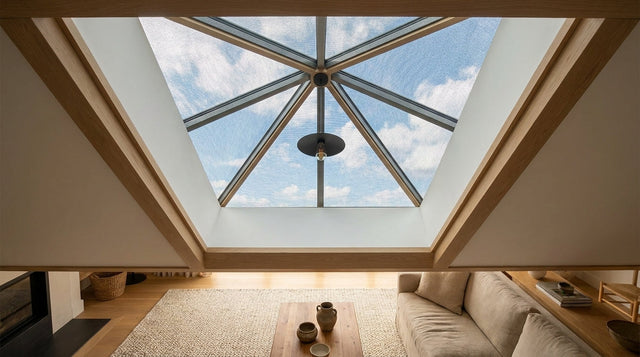
Snap shades shine on the windows that cook: west- and south-facing glass, sunrooms, RV and trailer windows, skylights that turn a room into a greenhouse by noon. EZ Snap runs dedicated kits for several of these — RV shades for coaches and trailers, skylight shades for overhead glass, and boat shades for marine cabins where drilling is a non-starter.
They're less the answer when you want full blackout or a finished interior look — that's an interior-curtain job. Snap shades are about the kind of outdoor window covering that actually blocks the sun rather than just decorates, controlling heat and glare from the outside, where the energy battle is actually won.
One sister note for context: the same DIY-snap philosophy carries over to EZ Snap's RV skirting, which uses Diamond Weave™ fabric and can deliver up to 40% heating and propane savings in winter — the cold-season counterpart to a summer shade. Kits for the shade system start at $66.95, with free shipping over $225, and the materials carry a Limited Lifetime warranty. The company has been building this snap system since 2006 and has served more than 38,000 customers, on the patented mechanism Ray Waddell first filed under U.S. Patent 8,032,994.
That's the whole story of easy snap shades: a small, clever snap, a tight exterior mesh, and the physics of stopping the sun before it gets to your glass — all installable with scissors before dinner.
Sources
- "Exterior shutters and shades... are most effective at reducing solar heat gain." The page also states window awnings can reduce solar heat gain by up to 65% on south-facing windows and 77% on west-facing windows. U.S. Department of Energy (Energy Saver), 2024 ↗
- "Exterior window attachments block solar heat before it reaches the window." Interior attachments "can be less effective at reducing heat gain than comparable exterior shading systems because they do not block direct sunlight until after it has already passed through the window." DOE Building America Solution Center (Pacific Northwest National Laboratory), 2023 ↗
- "Depending on the material used, solar screens have the potential to block up to 90% of solar heat gain before it even reaches the window." U.S. Department of Energy, Office of Energy Efficiency & Renewable Energy (EERE), 2023 ↗
- "Heat gain and heat loss through windows are responsible for 25%-30% of residential heating and cooling energy use." U.S. Department of Energy — Energy Saver, 2024 ↗
- Windows "are known as the weakest link in the thermal envelopes" and are "attributable for approximately 10% of building energy use"; though only ~8% of envelope area, they can contribute "up to 45% of the envelope heat loss" in climate zones 4 and 5. Lawrence Berkeley National Laboratory — Windows & Daylighting, 2023 ↗
Common questions
What are snap shades?
Snap shades are exterior solar screens held to the outside of a window by a patented no-drill Cap and Pin snap plus 3M VHB tape, so nothing is drilled into the frame. They are two parts working together: the EZ Snap Sun Screen kit, which is the hardware, and Optical Grade Thermo-Weave mesh, which is the shading material. It is not a roller blind, an interior curtain, or a film stuck to the glass.
Do snap shades require drilling into the window frame?
No. Instead of pilot holes and screws, a small pin base bonds to the frame with industrial 3M VHB tape, the mesh slips over it, and a cap snaps down to lock the fabric in place. The adhesive needs a surface around 60 degrees, grabs in about 60 seconds per stud, and reaches full strength in roughly 72 hours. No drill bit ever touches your siding or trim, and nothing is left behind when you take them down.
What is the difference between black and white snap shade mesh?
Black mesh is the heat-stopping choice, blocking up to 90 percent of the solar heat that would otherwise hit your glass. White mesh trades some of that heat rejection for more transmitted daylight, making it the pick when a room feels too dark with black. Both use the same Optical Grade Thermo-Weave weave and the same snap hardware.
Why shade the outside of the glass instead of the inside?
Shading the outside works because it blocks solar heat before it reaches the window at all, while an interior blind only acts after sunlight has already passed through the glass and become heat inside the room. The Department of Energy identifies exterior shutters and shades as the most effective option for reducing solar heat gain. Windows are the thermal weak link, driving roughly 25 to 30 percent of home heating and cooling energy use.
How long does it take to install snap shades?
Installing snap shades is a one-person, one-afternoon job. You clean and measure the frame, cut the mesh to shape with scissors since it will not fray, press each VHB-backed pin base on with about 60 seconds of firm pressure, then stretch the mesh and click the caps down. Plan for dry, mild days, because the bond reaches full strength in about 72 hours.
Can renters and RV owners use snap shades?
Yes. Because the system is adhesive-and-snap rather than drilled-and-screwed, it leaves no permanent holes, so renters, HOA-bound homeowners, and RV owners who cannot drill into a coach all use it for the same reason. EZ Snap runs dedicated kits for RV, skylight, and boat windows, and the shades come down as easily as they went up when the season turns.