Don’t Replace Your Old Windows with Low-E Glass – Use Shade Screens

Imagine losing $1000 from your income every single year.
For most American households, that’s roughly how much it will cost to heat and cool their home for the year.
That adds up, especially when every dollar counts.
It’s no surprise that people are looking for ways to save on energy costs.
Typically, windows are the worst energy culprits on any given house.
Heat gain and heat loss through windows account for between 25%-30% of a home’s energy use for heating and cooling.
If a window has failing seals, it will perform even worse.
Even the type of the window frame can affect energy performance.
If the window frame is made from a material that is a poor insulator, such as aluminum, it can create what’s known as a thermal bridge and conduct heat from inside the house to outside.
One inefficient window can lose as much heat as 10 to 20 times what an insulated wall would lose.

Even if your window is new and well sealed, it could still be the cause for a lot of energy use in your home.
Solar energy is still able to pass through glass, so even an insulated window can heat up a room quickly if it gets a lot of sun.
In the dead heat of summer, having even just one window or skylight that gets a lot of sun exposure can mean the AC is running all day just to cool the room off.
So What Can Be Done?
The most common recommendation to make old windows more energy efficient is to replace them entirely with new, low-e windows.
Low-e windows are windows that have been treated with a film that reflects solar heat while still letting natural light pass through.
With less solar heat entering the home, the AC no longer has to work as hard to keep the house cool.
The less energy the AC uses, the more savings there are for the homeowner.
Is replacing old windows with new ones worth the cost?
There will be energy savings from replacing old windows with new, low-e glass windows but it comes with a substantial upfront cost.
The National Association of Realtors estimates the cost of replacing every window in a 2,450 square foot house to be around $19,000.
For a household trying to save money in energy bills, that’s a very large investment with a slow return.
What are some more cost effective alternatives to replacing an old window?
The most important thing to do with old windows is stop any exchange of air between the inside and outside of your house.
For drafty windows, using a product like rope caulk to seal up any holes can make a major improvement.
Plastic film insulation is another popular and effective solution for sealing up older windows.
Both options are inexpensive and simple enough for anyone to apply.
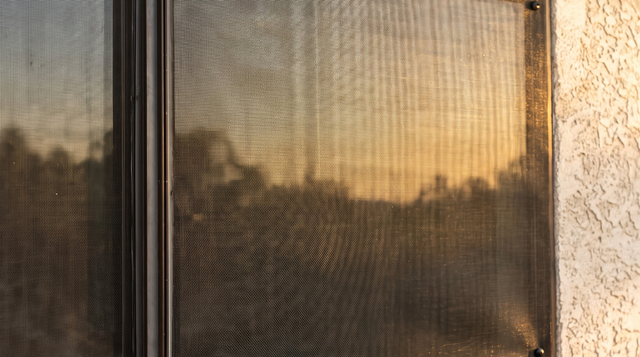
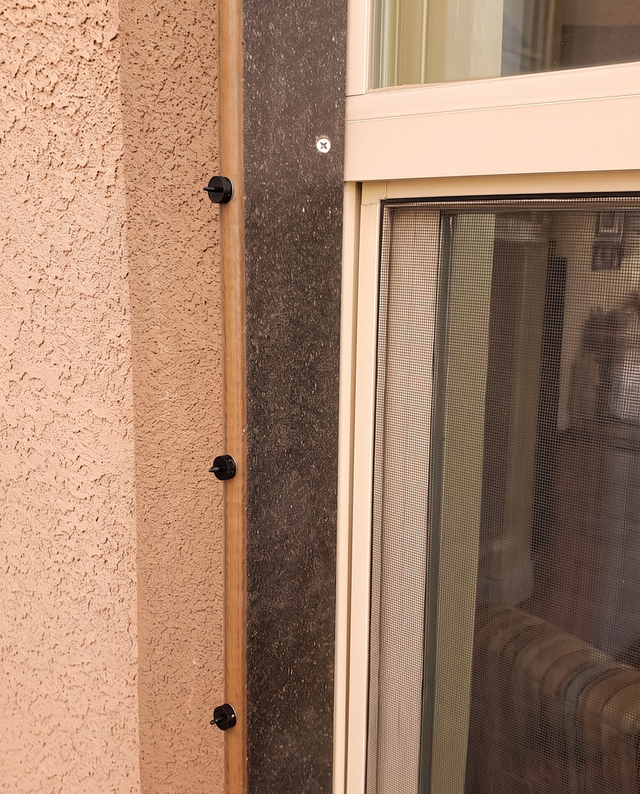
For windows that get a lot of sun exposure, a quick and easy way to make them more energy efficient is to mount exterior shade mesh on them (also called shade screen or solar screen/mesh/fabric).
There are a lot of different kinds of shade mesh available, but they all work by the same principle.
It’s a mesh fabric, and like low-e glass, it works by blocking solar heat and light, while still letting natural light through.
Unlike low-e glass, which is a film that’s been applied to the glass, solar mesh is installed on the exterior of the window.
Applying the shade screen to the outside of a window is key for it’s ability to keep a room cool.
If it’s applied to the inside of a window it will still work but not nearly as well.
If it’s mounted on the inside the screen will still provide shade from the sun, but the energy savings will be significantly less because the heat will be trapped inside the house.

If you are considering shade screens for your home and don’t know which one to choose, the easiest and best option is EZ-Snap®.
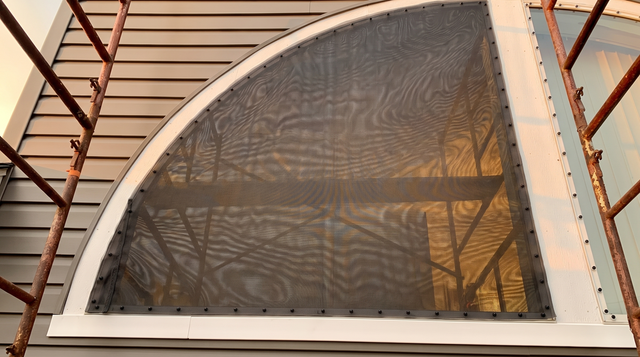
They sell do-it-yourself kits that let you mount and cut your mesh to your window, no matter it’s size or shape.
EZ-Snap is also a fraction of the cost of what you would pay to buy and install new windows.
You save on the price of the product, and because you are able to install it yourself, you save on labor as well.
EZ-Snap shade screen is also better at blocking solar heat than low-e glass.
The effectiveness of heat blocking applications for windows is measured by the Solar Heat Gain Coefficient (SHGC).
The SHGC is the amount of solar radiation (heat) that transmits through a window.
It’s measured between 0 and 1, and the less solar heat that transmits through a window, the lower a window’s SHGC number is going to be.
There are a lot of low-e glass makes and models, but the range of SHGC for most of them from varies between 0.60 – 0.25.
Shade mesh from EZ-Snap has a SHGC of .18.
Something else to consider is that low-e windows are known to damage turf and siding.
In the right conditions, the solar heat that they reflect can focus into a hot spot creating a magnifying glass effect that melts anything in its path.
The problem is becoming so rampant with the rising popularity of low-e windows that one scientist is calling them, “the next asbestos.”
If you or your neighbor has a low-e window that is damaging property, EZ-Snap is also the ideal solution.
Rather than replace the entire window, installing EZ-Snap window shade over the problem window provides a fast and effective fix.
The solar heat is reflected off of the mesh before it ever reaches the window, preventing any chance of a hot spot forming.
The result is 100 percent effective and can be installed in as little as an afternoon.
An added benefit to an exterior shade product like EZ-Snap is that it’s also removable. So, when the winter months come you can take it off and benefit from the natural heating you get with the sun.
It’s like getting free heat in the winter.
No matter which window option you choose to make your home more energy efficient, it’s important to do your research before making a final decision.
You want to make sure that you are going to be getting the maximum return for your investment.
Replacing your windows might be worth the cost, or it might make more sense to invest in solutions that are able to make your existing windows more energy efficient.
Common questions
Is it worth replacing old windows with low-e glass to save energy?
Replacing old windows with low-e glass does save energy, but it carries a large upfront cost with a slow return. The National Association of Realtors estimates replacing every window in a 2,450 square foot house at around $19,000. For a household trying to lower energy bills, that is a heavy investment to recover through savings alone.
What is a cheaper alternative to replacing windows for energy efficiency?
Exterior shade mesh is a low-cost alternative that makes existing windows more efficient without replacing them. Mounted on the outside, it blocks solar heat and light while still letting natural light through, at a fraction of the price of new windows. Sealing drafty windows with rope caulk or plastic film handles air leaks just as cheaply.
Does exterior shade screen block more heat than low-e glass?
Exterior shade screen blocks more solar heat than most low-e glass. Heat blocking is rated by Solar Heat Gain Coefficient, where lower is better. Most low-e glass ranges from 0.60 to 0.25, while EZ-Snap shade mesh has an SHGC of 0.18. Mounting it on the outside of the window is key to that performance.
Should solar shade screen be installed inside or outside the window?
Solar shade screen should be installed on the outside of the window. Applied outside, it reflects solar heat before it reaches the glass, so the heat never enters the room. Mounted on the inside it still provides shade, but the energy savings are significantly less because the heat is trapped inside the house.
Can low-e windows damage siding or artificial grass?
Yes, low-e windows are known to damage siding and turf. In the right conditions the solar heat they reflect can focus into a hot spot, creating a magnifying-glass effect that melts nearby surfaces. Covering the problem window with exterior shade mesh reflects the heat off the mesh first, preventing the hot spot from forming.
Can you remove exterior shade screens in winter?
Yes, exterior shade screens are removable. You can take them off when the winter months arrive so you benefit from natural solar heating through the glass, then reinstall them for summer. It is a seasonal, reversible way to manage heat rather than a permanent change to the window itself.