Golf Ball Window Protection Screens: How Exterior Mesh Stops the Strike

- Golf ball window protection screens work because a tensioned exterior mesh flexes inward on impact, spreading the collision over more time and area so peak force drops.
- Rigid glass concentrates a golf ball's kinetic energy into a tiny contact zone in a fraction of a second, which is what cracks or shatters the pane.
- An exterior-mounted screen stops both impact and solar heat before either reaches the glass, while interior treatments only act after heat has passed through the window.
- Black Optical Grade Thermo-Weave mesh blocks up to 90% of solar heat gain before it reaches the window, so a golf-ball screen doubles as a summer solar shade.
- Exterior screens dramatically improve the odds against a shattered pane but are not an absolute guarantee, since outcomes depend on ball speed, strike angle, panel size and screen tension.
Key Takeaways
- Golf ball window protection screens work by flexing on impact — a tensioned exterior mesh stretches the collision over more time and area, slashing the peak force that would otherwise crack rigid glass.
- EZ-Snap® Sun Screen panels use Optical Grade Thermo-Weave mesh that cuts to any window shape with scissors, mounts with a no-drill 3M VHB snap system, and installs in an afternoon.
- Because the screen mounts outside the glass, it stops impacts and solar heat before they reach the window — the U.S. Department of Energy calls exterior shading the most effective way to reduce solar heat gain.
- Black Thermo-Weave mesh blocks up to 90% of solar heat gain before it reaches the window, so a golf-ball screen doubles as a high-performing summer solar shade.
- Exterior screens reduce the odds of a shattered pane but are not an absolute guarantee; real impact outcomes depend on ball speed, angle, panel size, and tension.
There is a particular sound a homeowner near the seventh fairway learns to dread: the flat, percussive crack of a mishit Titleist meeting plate glass at full flight. A golf ball window protection screen exists to replace that sound with a soft, anticlimactic thud — and the reason it can is not magic, but a tensioned panel of mesh doing exactly what rigid glass cannot.
The instinct, when you live where errant drives land, is to armor up: thicker glass, a storm pane, something hard enough to take the hit. But hardness is the wrong property. A pane resists until it doesn't, then fails all at once. A flexible exterior screen does the opposite — it gives, spreads the load, and gives the ball nothing solid to break against. Understanding that distinction is the whole story behind why these screens work, and it's the thread running through any honest guide on how to protect windows from golf balls without simply throwing money at heavier glass.
Why a flexible screen beats a hard one
Impact is about energy, and energy has to go somewhere. When a golf ball strikes a rigid window, the glass has almost no room to deform, so the kinetic energy concentrates into a tiny contact zone in a fraction of a second. That spike is what cracks or shatters the pane. A tensioned exterior mesh changes the math entirely: it deflects inward like a trampoline, stretching the contact event across more time and a wider area. Slow the deceleration down, and the peak force the ball can deliver drops dramatically.
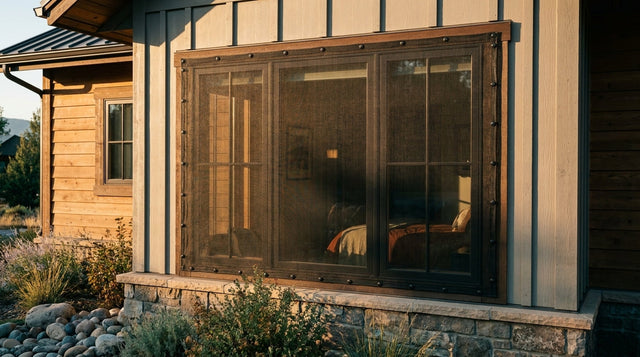
This is the same principle as a catcher's mitt versus a brick wall. The ball that bounces hard off concrete settles gently into leather, because the glove lets the hand travel backward through the catch. Our EZ-Snap Sun Screen mesh is engineered to be that mitt — mounted a few inches off the glass, under tension, with the room to flex and rebound. The pane behind it never gets the concentrated blow.
A hard surface stops a golf ball all at once. A flexible screen stops it over time — and time is what saves the glass.
Inside the Optical Grade Thermo-Weave mesh
The performance lives in the weave. EZ-Snap Sun Screen panels are made from Optical Grade Thermo-Weave™, the shade-side sibling of the rugged Diamond Weave™ fabric used in our skirting line. It's a tight, knitted polymer mesh built to hold tension without sagging, and it cuts cleanly to any window shape with ordinary scissors — non-fray edges, no hemming, no special tools. That last point matters more than it sounds: a screen that survives a strike is only useful if it actually covers the unusual bay windows, transoms, and oversized panes that golf-course-adjacent homes tend to have.
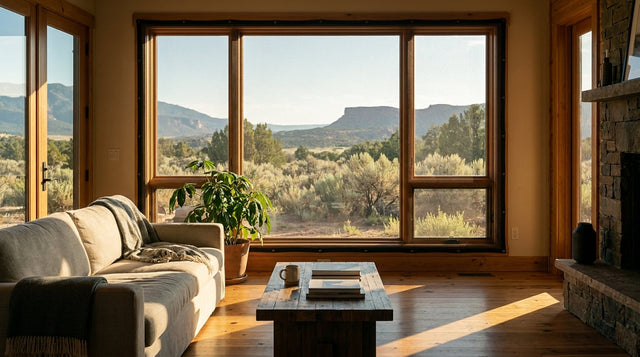
Because the weave is dense and dimensionally stable, it does double duty. The same panel that catches a wayward ball is also a high-performing solar screen. The black mesh blocks up to 90% of the sun's heat before it ever touches the glass3, while a white mesh option trades some of that heat rejection for more transmitted daylight. You can think of golf-ball defense as the dramatic feature and heat control as the one that quietly pays for itself every summer afternoon.
What we will not pretend to know
Here is where editorial honesty earns its keep. You will find marketing copy across the web quoting exact impact speeds a screen can "stop." We are not going to hand you a number we cannot stand behind. A real impact outcome depends on the ball's velocity, the strike angle, the panel size, and how the screen is tensioned — variables no single figure captures. What we can say plainly is that a flexible, tensioned exterior mesh absorbs and redistributes impact energy that rigid glass would otherwise take head-on. The mechanism is sound; the marketing math is where things tend to get invented.
Mounted outside the glass, where it counts
Every benefit here hinges on one detail: the screen sits on the exterior. That's deliberate, and it's the same reason the U.S. Department of Energy calls exterior shading the most effective way to reduce solar heat gain1. Exterior attachments stop the sun's energy before it passes through the window, while interior treatments only act after the heat is already inside2. For golf-ball defense the logic is even more obvious — an interior screen would be catching the ball after it had already gone through your glass, which rather defeats the point.
The catch with most exterior screens has always been installation: drilling brackets, mounting tracks, hiring a crew. EZ-Snap removes the drill entirely. The patented Cap & Pin snap system bonds to the window frame with 3M VHB tape — about 60 seconds per stud to apply, then a cure to roughly 60°F that reaches full strength in around 72 hours. Once cured, the panel snaps on and off by hand, and the whole job goes up in an afternoon. No fasteners, no holes, no compromised frame.
Beyond the fairway: where else the screens earn their keep
Golf balls are the headline, but a tensioned exterior mesh is a generalist. The same panel that shrugs off a strike also stands between your glass and hail-driven debris, low-angle baseballs from the yard next door, and the steady grind of UV and heat. Homeowners who install for one threat usually keep them for the energy bill.
- Fairway-facing rooms: the obvious case — protect the panes most exposed to the course while keeping the view.
- Whole-home heat control: the same screens are the backbone of our exterior shades line, cutting cooling load on sun-blasted south and west walls. They double as exterior solar screens for any sun-facing window.
- RVs, cabins, and odd-shaped openings: because the mesh cuts to any shape, it adapts to RV windows and non-standard panes a rigid storm panel never could.
What to weigh before you buy
A golf ball window protection screen is not a force field, and the right expectation is a flexible barrier that dramatically improves your odds, not an absolute guarantee against every conceivable strike. With that framing, the value is easy to see. EZ-Snap kits start at $66.95, ship free over $225, and carry a Limited Lifetime materials warranty from a company that's been doing this since 2006 and served more than 38,000 customers. You can build your window shade kit to size a panel for your own windows. The no-drill install means renters and HOA-bound owners can use them too, and the snaps let you pull a panel for cleaning in seconds.
If you've been pricing impact glass after one too many close calls off the tee, it's worth seeing how mesh stacks up against the alternatives before you commit — our breakdown of the best window protection from golf balls weighs screens against film and impact glass, and a closer look at golf-ball-proof windows for course-side homes shows why you rarely need to replace the glass at all. The screen is the quieter, cheaper, reversible answer — and it lowers your summer cooling bill while it waits for the next mishit. Walk through the mechanism and the install detail on how it works, and you'll see why the soft thud beats the crack every time.
Sources
- "Exterior shutters and shades... are most effective at reducing solar heat gain." The page also states window awnings can reduce solar heat gain by up to 65% on south-facing windows and 77% on west-facing windows. U.S. Department of Energy (Energy Saver), 2024 ↗
- "Exterior window attachments block solar heat before it reaches the window." Interior attachments "can be less effective at reducing heat gain than comparable exterior shading systems because they do not block direct sunlight until after it has already passed through the window." DOE Building America Solution Center (Pacific Northwest National Laboratory), 2023 ↗
- "Depending on the material used, solar screens have the potential to block up to 90% of solar heat gain before it even reaches the window." U.S. Department of Energy, Office of Energy Efficiency & Renewable Energy (EERE), 2023 ↗
Common questions
How do golf ball window protection screens work?
They work by flexing on impact instead of resisting it. A tensioned exterior mesh mounted a few inches off the glass deflects inward like a trampoline, stretching the collision over more time and a wider area so the peak force that would crack rigid glass drops dramatically. The pane behind it never takes the concentrated blow.
Will a mesh screen guarantee my window won't break?
No, an exterior screen is not an absolute guarantee, and any honest guide should say so. It is a flexible barrier that dramatically improves your odds, but the real outcome depends on ball speed, strike angle, panel size, and how tightly the screen is tensioned. The mechanism reliably absorbs and redistributes impact energy, but no single figure captures every strike.
Do golf ball screens also block heat and sunlight?
Yes, the same panel doubles as a high-performing solar shade. Because it mounts outside the glass, black Thermo-Weave mesh blocks up to 90% of the sun's heat before it ever reaches the window. A white mesh option trades some heat rejection for more transmitted daylight, and the optical-grade weave keeps your view.
Can these screens be installed without drilling?
Yes, they install with a no-drill snap system, no holes or brackets required. The patented Cap and Pin studs bond to the window frame with 3M VHB tape, about 60 seconds per stud, curing to full strength in around 72 hours. Once cured, panels snap on and off by hand and the job goes up in an afternoon.
Will a screen fit an unusual or oversized window?
Yes, the mesh cuts cleanly to any window shape with ordinary scissors. The Optical Grade Thermo-Weave has non-fray edges, so it needs no hemming or special tools and adapts to bay windows, transoms, oversized panes, and odd-shaped openings a rigid storm panel never could. You can size a panel to your own windows.
How much do golf ball window screens cost?
EZ-Snap kits start at $66.95 and ship free on orders over $225. They carry a Limited Lifetime materials warranty from a company that has been making them since 2006 and served more than 38,000 customers. Because the install is no-drill and reversible, they also work for renters and HOA-bound owners.