Golf-Ball-Proof Windows: Protecting Course-Side Homes Without Replacing the Glass

Key Takeaways
- Exterior mesh shades make fairway-facing windows golf-ball-proof by adding a sacrificial, standoff layer that absorbs and disperses impact before it reaches the glass — no glass replacement required.
- The U.S. Department of Energy identifies exterior shutters and shades as the most effective window attachments for reducing solar heat gain, because they block energy before it reaches the pane.
- EZ-Snap®'s black Thermo-Weave mesh blocks up to 90% of solar heat gain, so the same layer that buffers errant drives also cuts afternoon heat in west- and south-facing rooms.
- The patented no-drill Cap & Pin snap system installs in an afternoon with scissors, starts at $66.95, and protects windows at a fraction of per-opening impact-glass cost.
- EZ-Snap has operated since 2006, served 38,000+ customers, and backs its materials with a Limited Lifetime warranty.
There is a particular sound every fairway-facing homeowner learns to dread: the sharp, glassy crack of a sliced drive finding a window instead of the green. If your house sits along a course, you already know the geometry is not in your favor, and you have probably priced out impact glass and felt your stomach drop. The good news is that protecting your windows does not require tearing them out.
Can you make windows golf-ball-proof without replacing the glass?
Yes. Rather than swapping in costly impact-rated glass, you can mount a taut exterior mesh screen an inch or two off the existing pane on a no-drill snap system. That standoff layer absorbs and disperses a strike's energy before it reaches the glass — and as a bonus, black mesh blocks up to 90% of solar heat. The window, frame, and view all stay.
The phrase golf ball proof windows usually conjures one expensive image: laminated impact-rated glass, professionally measured, professionally installed, and quoted by the opening. But there is a quieter, older idea in building science that solves the same problem from the outside in — stopping the energy before it reaches the pane. That is exactly where exterior mesh earns its keep.
Why fairway windows take the hits they do
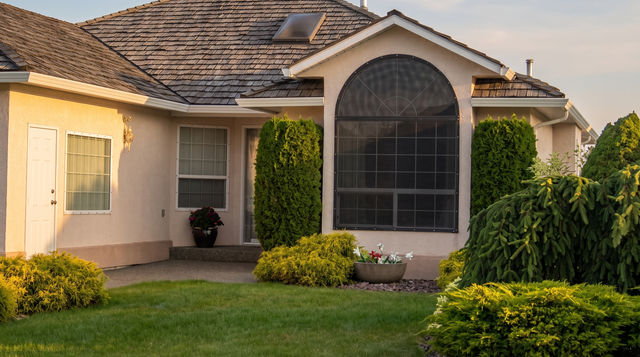
A golf course is a long corridor of open turf bordered by homes, and the average amateur slice does not respect property lines. Homes near the 150-yard mark, dogleg corners, and anything left of a right-handed tee box catch the most traffic. The windows most exposed are typically the large, ground-floor and second-story panes facing the fairway — the same big west- and south-facing glass that bakes in afternoon sun. So you are usually fighting two problems at once: errant golf balls and solar heat gain through the very same windows.
That overlap matters, because the most effective fix for one turns out to be a strong candidate for the other. The U.S. Department of Energy notes that exterior shutters and shades are the most effective window attachments for reducing solar heat gain.1 The reason is simple physics: an exterior layer intercepts energy before it ever touches the glass.2
The case against ripping out your glass
Impact glass works. It is also a renovation. You are paying for laminated units, removal, disposal, framing adjustments, and labor — per opening, often into four figures for the larger fairway-facing panes. For a multi-window elevation, the bill compounds fast. And critically, replacing the glass does almost nothing for the heat problem unless you also pay up for a low-E, solar-control package on top. If you are still weighing the trade-offs, it helps to see how screens, film, and impact glass stack up side by side before committing to the most expensive route.
The cheapest pane to protect is the one you never have to replace.
An impact resistant window alternative flips the math. Instead of upgrading the most expensive component in the wall, you add a sacrificial, replaceable layer in front of it. The glass stays. The frame stays. The mesh takes the abuse.
How exterior mesh becomes golf course window protection
The EZ-Snap Sun Screen is a kit built around Optical Grade Thermo-Weave™ mesh — a tight, tough exterior fabric that mounts an inch or two off the glass on a patented no-drill snap system. When something strikes it, the mesh and its standoff absorb and disperse energy rather than transmitting a point load straight into the pane. The screen is the shock-spreader; the air gap is the buffer. If you want the mechanics in detail, it is worth understanding how exterior mesh stops the strike before it ever reaches the pane.
To be clear about what we can and cannot claim: we do not publish a tested golf-ball impact rating, and you should be skeptical of anyone who throws a hard number at you for a backyard mesh. What we can say is that a taut exterior layer standing off the glass changes the failure mode — it gives a strike something to hit, flex against, and dissipate into before the glass is in play. For most slice-and-bounce contact that defines fairway life, that buffer is the whole game.
Built to live outdoors
- Black mesh blocks up to 90% of solar heat before it reaches the window — the same exterior-first principle the DOE cites for solar screens.3
- White mesh lets in more daylight while still cutting heat, if you would rather keep the view bright.
- Non-fraying fabric cuts cleanly to any window shape with household scissors — arches, half-rounds, odd transoms included.
- Limited Lifetime materials warranty, from a company that has been doing this since 2006 and served 38,000+ customers.
The no-drill install most homeowners do in an afternoon
This is the part that surprises people. There is no drilling into your frames, no installer crew, no scaffolding contract. The system uses a patented Cap & Pin snap paired with industrial 3M™ VHB tape. You clean the surface, apply the snaps (roughly 60 seconds per stud), stretch the mesh, and trim. The VHB cures best around 60°F and reaches full strength in about 72 hours — so you do the work in an afternoon and simply let it set.
Because it is a kit and not a custom-glazing job, you can do the most-exposed fairway elevation first and add others as you go. Kits start at $66.95, with free shipping over $225 — which puts a full ground-floor frontage in the range of a single impact-glass opening. When you are ready, you can size and order your shade kit in a few minutes. For the full lineup and sizing, the Exterior Sun Screens collection is the place to start, and how it works walks through the snap system step by step.
A two-for-one for fairway home windows
Here is the quiet win. The same screen that buffers errant drives is, by design, an energy product. Exterior shading is more effective than any interior blind or film precisely because it stops sun before the glass.2 So the layer protecting your fairway home windows from golf balls is also knocking down the afternoon heat that makes those west-facing rooms unbearable in summer. You are not choosing between protection and comfort — you get both from one snap-on layer.
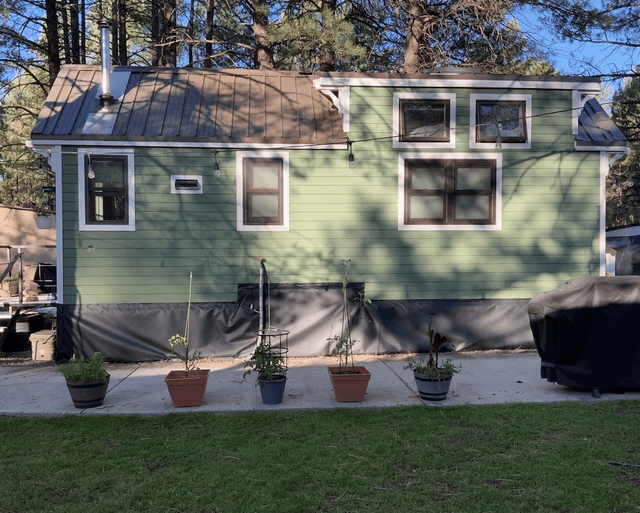
If your property fight extends past the glass — exposed foundations, a deck, or a park-model on the course perimeter — the same brand logic carries over to Diamond Weave™ skirting, which can trim heating and propane costs by up to 40% on RVs, tiny homes, and similar structures. Different material, same idea: a tough exterior layer that snaps on and stays put.
What to do before the next slice finds you
Walk your fairway-facing elevation and rank the windows by exposure — the big, low, course-side panes first. For a step-by-step plan, our course-side homeowner's guide to protecting windows from golf balls covers measuring and prioritizing in order. Decide black mesh for maximum heat rejection or white for brightness. Then protect the worst offenders this weekend and expand from there. You will spend a fraction of a glass replacement, you will lose none of your view, and the next time you hear that glassy crack somewhere down the block, it won't be coming from your house.
Sources
- "Exterior shutters and shades... are most effective at reducing solar heat gain." The page also states window awnings can reduce solar heat gain by up to 65% on south-facing windows and 77% on west-facing windows. U.S. Department of Energy (Energy Saver), 2024 ↗
- "Exterior window attachments block solar heat before it reaches the window." Interior attachments "can be less effective at reducing heat gain than comparable exterior shading systems because they do not block direct sunlight until after it has already passed through the window." DOE Building America Solution Center (Pacific Northwest National Laboratory), 2023 ↗
- "Depending on the material used, solar screens have the potential to block up to 90% of solar heat gain before it even reaches the window." U.S. Department of Energy, Office of Energy Efficiency & Renewable Energy (EERE), 2023 ↗
Common questions
Can you make windows golf-ball-proof without replacing the glass?
Yes. Instead of installing costly impact-rated glass, you mount a taut exterior mesh screen an inch or two off the existing pane on a no-drill snap system. That standoff layer absorbs and disperses a strike's energy before it reaches the glass, so the window, frame, and view all stay in place.
How does an exterior mesh screen stop a golf ball?
The screen works as a shock-spreader and the air gap behind it works as a buffer. When something strikes the taut mesh, it flexes and disperses the energy rather than transmitting a hard point load straight into the pane, which changes how and whether the glass fails on typical slice-and-bounce contact.
Do golf-ball window screens also reduce heat?
Yes, and that is the two-for-one benefit. The same black exterior mesh that buffers errant drives blocks up to 90 percent of solar heat before it reaches the window. Because fairway-facing panes are often the same large west- and south-facing glass that bakes in the afternoon, one snap-on layer solves both problems at once.
How much do exterior window shade kits cost?
Kits start at $66.95, with free shipping on orders over $225. Because it is a kit rather than a custom-glazing job, a full ground-floor frontage can land in the range of a single impact-glass opening, so you can protect the most-exposed elevation first and add others as your budget allows.
How are the screens installed?
Installation is a no-drill process most homeowners finish in an afternoon. You clean the surface, apply the patented Cap and Pin snaps with industrial 3M VHB tape at roughly 60 seconds per stud, stretch the mesh, and trim it to shape with household scissors. The adhesive cures best around 60 degrees and reaches full strength in about 72 hours.
Is exterior mesh cheaper than impact glass?
Yes. Impact glass is a full renovation billed per opening, often into four figures for larger fairway-facing panes, plus removal, framing, and labor. Exterior mesh adds a sacrificial, replaceable layer in front of the glass you already have, so you keep the frame and view and spend a fraction of a glass replacement.