How to Protect Windows From Golf Balls: A Course-Side Homeowner's Guide

Key Takeaways
- Exterior shade mesh protects course-side windows by absorbing a golf ball's impact and spreading the force, the way a net stops a ball a rigid wall would shatter against.
- The U.S. Department of Energy identifies exterior shading as the most effective way to reduce solar heat gain, because it blocks the sun before it reaches the glass rather than after.
- EZ-Snap®'s Optical Grade Thermo-Weave black mesh blocks up to 90% of solar heat; the white mesh allows more interior light with less heat reduction.
- The system installs with no drilling using a patented Cap & Pin snap and 3M VHB tape, cuts to any window shape with scissors, and most homeowners finish in an afternoon.
- EZ-Snap kits start at $66.95 with free shipping over $225, backed by a Limited Lifetime materials warranty from a company making this mesh since 2006.
How do you protect windows from golf balls?
The most practical fix is a taut layer of exterior shade mesh mounted an inch or two off the glass. It catches the ball and spreads the impact across the screen instead of into the brittle pane, and it installs with no drilling. As a bonus, the same screen blocks up to 90% of solar heat gain.
If your back fence is also someone else's fairway, you already know the sound: a sharp crack against vinyl siding, the skitter of a dimpled ball across the patio, and the quiet math you run every time about how close that one came to the glass. Living course-side is wonderful right up until a stranger's slice turns your picture window into a liability.
This guide is about the gap between worrying and doing something. There are several ways to protect windows from golf balls, and most of them are ugly, permanent, or expensive. There is one approach that is none of those three: a taut layer of exterior shade mesh that takes the hit before your glass ever feels it, while quietly cutting the afternoon heat that course-side homes tend to bake in. If you'd rather weigh every option first, our breakdown of the best window protection from golf balls lays the alternatives side by side.
Why course-side glass is uniquely exposed
A window is a flat, rigid, brittle plane. A golf ball is a small, dense projectile that arrives with no warning and no apology. The homes most at risk sit along doglegs, near tee boxes, or downrange of the kind of holes that punish a confident swing — and the windows that get hit are rarely the ones you'd guess. Second-story bedrooms, sunroom panels, and wide patio sliders all present big, tempting targets.
The conventional fixes each carry a cost. Storm shutters seal off your view and your light. Polycarbonate panels yellow and scratch. Replacing the glass with tempered or laminated units means a contractor, a permit conversation, and a bill that climbs fast with every pane. None of those is wrong, exactly. They're just heavy answers to a problem that has a lighter one — and you can often get golf-ball-proof protection without replacing the glass at all.
How exterior mesh actually stops the strike
The principle is older than the product: it's the same reason a net stops a ball that a wall would shatter against. A rigid surface resists impact and concentrates the force; a tensioned flexible surface receives the impact and spreads it out, decelerating the object over distance instead of in an instant. Hang a taut screen an inch or two off your glass and an incoming ball loses its energy into the give of the mesh rather than into the brittle pane behind it. We dig deeper into how exterior mesh stops the strike if you want the full mechanics.
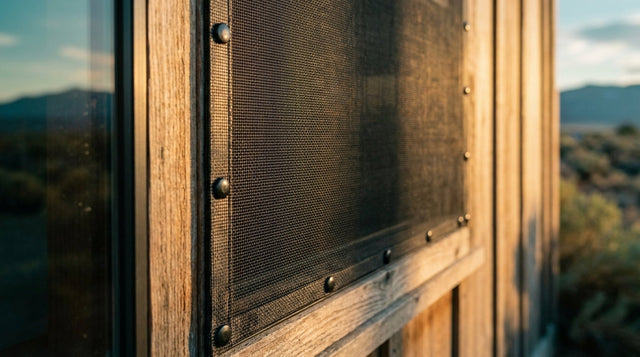
EZ-Snap's Exterior Sun Screens use a heavy woven mesh called Optical Grade Thermo-Weave™ — the shade-side sibling of the company's Diamond Weave™ skirting fabric. It's a tight, durable weave built to sit outdoors in sun and wind for years, which is exactly the toughness you want standing between a fairway and your living room. The mesh cuts to any window shape and won't fray at the edge, so it suits the odd sunroom geometry and tall patio runs that course-side homes love.
A rigid pane fights the ball and loses. A tensioned screen catches it and lets go slow.
One honest caveat, because this brand doesn't fabricate specs: shade mesh is engineered as solar screening, not as a tested ballistic barrier, and the protection it offers against a given impact depends on the strike. Think of it as a serious, sensible buffer that also earns its keep every sunny day — not a bulletproof guarantee.
The heat dividend you didn't pay extra for
Here's where the math turns generous. The same screen that buffers your glass is, first and foremost, one of the best solar tools you can hang. The U.S. Department of Energy is blunt about it: exterior shading is the most effective way to reduce solar heat gain, precisely because it stops the sun before it reaches the window.1 Interior blinds and films only act after sunlight has already passed through the glass and become heat inside your room.2
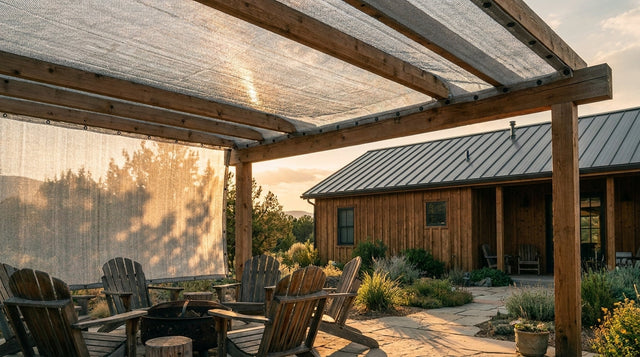
Exterior solar screens, depending on the material, can block up to roughly 90% of solar heat gain before it ever touches the pane.3 EZ-Snap's black mesh blocks up to 90% of solar heat; the white mesh trades some of that for brighter, softer interior light. So the layer protecting your windows from golf balls is also the layer keeping your west-facing rooms livable in July. You can read the full mechanism on the how it works page.
- Course-side window protection that also tames glare on the holes you actually watch from the kitchen.
- Lower cooling load on the sun-blasted elevations that course lots so often face.
- An exterior mesh window guard you can see through from inside, so the view you bought stays the view you keep.
No-drill install, done in an afternoon
The reason most people never get around to protecting their glass is the dread of the project. This one removes the dread. EZ-Snap mounts with a patented no-drill Cap & Pin snap system bonded by 3M VHB tape — no holes in your frames, no ladder-borne anxiety about screws and stucco.
The rhythm is simple: clean the frame, press the snap bases on at roughly one every stud-width, give the 3M VHB its cure time (about 60 seconds of firm pressure per snap, reaching full strength in around 72 hours at about 60°F or warmer), then cut the mesh to shape with ordinary scissors and snap it over. Most homeowners cover their at-risk windows in an afternoon. Kits start at $66.95, and shipping is free over $225. When you're ready, size your exterior shade kit to the windows you want to protect.
Where to start if you're course-side
Prioritize by exposure, not by room. Map the holes nearest your property and screen the windows downrange of them first — then the big west and south elevations for the heat benefit. The same system scales across the house, and EZ-Snap's lineup runs well beyond patio walls: there are dedicated RV shades for the rig in the driveway and skylight shades for the overhead glass that bakes in summer.
The case for doing it now
EZ-Snap has been making this mesh since 2006 — that's 20 years — and has served more than 38,000 customers, with a Limited Lifetime warranty on the materials. The no-drill snap is genuinely patented (U.S. 8,032,994, inventor Ray Waddell), not marketing dressing. None of that stops a slice from leaving the tee. But it does mean the thing you hang to catch that slice will still be standing, taut and clear, many summers from now.
The golf ball is going to come eventually — that's the deal you signed when you bought the view. The only open question is whether it finds bare glass or a screen that was built to take it. An afternoon, a pair of scissors, and a roll of Thermo-Weave™ is a small price for never having to listen for the crack again.
Sources
- "Exterior shutters and shades... are most effective at reducing solar heat gain." The page also states window awnings can reduce solar heat gain by up to 65% on south-facing windows and 77% on west-facing windows. U.S. Department of Energy (Energy Saver), 2024 ↗
- "Exterior window attachments block solar heat before it reaches the window." Interior attachments "can be less effective at reducing heat gain than comparable exterior shading systems because they do not block direct sunlight until after it has already passed through the window." DOE Building America Solution Center (Pacific Northwest National Laboratory), 2023 ↗
- "Depending on the material used, solar screens have the potential to block up to 90% of solar heat gain before it even reaches the window." U.S. Department of Energy, Office of Energy Efficiency & Renewable Energy (EERE), 2023 ↗
Common questions
How do you protect windows from golf balls?
The most practical fix is a taut layer of exterior shade mesh mounted an inch or two off the glass. It catches the ball and spreads the impact across the screen instead of into the brittle pane, and it installs with no drilling. As a bonus, the same screen blocks up to 90% of solar heat gain.
How does exterior mesh stop a golf ball when glass shatters?
It works the way a net stops a ball a wall would shatter against. A rigid pane resists the impact and concentrates the force, while a tensioned flexible screen receives the ball and spreads the energy out, decelerating it over distance instead of in an instant. Hung off the glass, the mesh absorbs the hit before the pane ever feels it.
Is shade mesh a guaranteed golf-ball barrier?
No, it is a serious buffer rather than a bulletproof guarantee. The mesh is engineered as solar screening, not as a tested ballistic barrier, and the protection against any given strike depends on that impact. Think of it as a sensible layer that takes the hit off your glass and also earns its keep every sunny day.
Does the same screen also block heat?
Yes, it is first and foremost one of the best solar tools you can hang. EZ-Snap's black mesh blocks up to 90% of solar heat gain, stopping the sun before it reaches the glass, while the white mesh trades some heat reduction for brighter, softer interior light. So the layer protecting your windows also keeps west-facing rooms livable in July.
Do you have to drill to install the screens?
No. The system mounts with a patented no-drill Cap and Pin snap bonded by 3M VHB tape, so there are no holes in your frames. You clean the frame, press the snap bases on, give the VHB about 60 seconds of firm pressure each with full strength in around 72 hours, then cut the mesh with scissors and snap it over. Most homeowners finish in an afternoon.
How much do the kits cost and are they warrantied?
Kits start at $66.95, with free shipping over $225. They are backed by a Limited Lifetime materials warranty from a company that has been making this mesh since 2006, that is 20 years, and served more than 38,000 customers. The no-drill snap is genuinely patented, not marketing dressing.