Outside Window Shades for Your House: A Room-by-Room Heat-Control Plan

Key Takeaways
- Exterior window shades are the most effective way to reduce solar heat gain because they block the sun before it reaches the glass, unlike interior blinds that only react after heat is already inside.
- EZ-Snap®'s Optical Grade Thermo-Weave™ black mesh blocks up to 90% of solar heat while keeping a clear view; white mesh lets in more daylight with less heat for rooms where brightness matters.
- Plan exterior shading room by room: black mesh on west and south rooms that bake in afternoon sun, white mesh on north windows, kitchens, and reading spaces where you want the light.
- The patented no-drill Cap & Pin snap with 3M™ VHB installs each window in an afternoon with scissors—no holes, no contractor—with kits starting at $66.95.
- Windows drive a large share of a home's heating and cooling energy, so shading the most sun-exposed glass directly reduces the load on the air conditioner.
Stand outside your house at four in the afternoon in July and run the back of your hand across the glass on the west wall. It is warm — sometimes hot enough to flinch — and that warmth is the sun already winning, pouring energy into your living room before your air conditioner has any say in the matter. Outside window shades for your house are simply the decision to stop that exchange at the property line instead of fighting it indoors.
Most heat-control advice treats a home as one undifferentiated box. It isn't. A south-facing kitchen, a west-facing bedroom, and a north-facing office each live under a different sun, and the right shading plan is room by room, not house-wide. This guide walks the building the way the sun does, and pairs each exposure with the mesh that fits it.
Why the fight is won on the outside of the glass
The physics here is unglamorous and decisive. Sunlight that reaches your window is partly transmitted and partly absorbed, then re-radiated as heat trapped inside the room — the metric for that is Solar Heat Gain Coefficient, the fraction of solar radiation a window admits and releases as indoor heat.5 Once that energy is on the warm side of the glass, your AC is the only thing left to remove it. Windows are already the thermal weak link of the whole building: they're a small share of the wall area but responsible for an outsized portion of a home's heating and cooling energy.6
This is why an interior blind, however handsome, is always playing catch-up. By the time light hits an inside shade, it has already passed through the glass and become heat in the room.2 The U.S. Department of Energy is blunt about the hierarchy: exterior shutters and shades are the most effective option for reducing solar heat gain, because they intercept the sun before it ever reaches the window.1 The same DOE work notes that, depending on the material, exterior solar screens can block up to 90% of solar heat gain before it touches the glass.3 If you want the mechanics in detail, our breakdown of how shade screens work and how much heat they really block walks through exactly why interception beats absorption.
Stop the sun at the glass, not in the room — that single move is the most effective thing you can do for summer comfort.
Read your house like a sundial first
Before you order anything, spend one bright day noticing where the heat actually lands. The four walls do not share a problem.
- West-facing — the worst offender. Low afternoon sun drives straight through the glass during the hottest hours, turning bedrooms and living rooms into ovens by dinner.
- South-facing — high, sustained sun all day; strong heat gain but more predictable, and easier to manage than the west.
- East-facing — bright, hot mornings that cool off by afternoon. Comfortable for sleeping-in spaces only if you tame the dawn.
- North-facing — soft, even light and little direct gain. Usually the room where you preserve the view and let more light through.
Whichever wall you start with, the exterior approach is the same kit: the EZ-Snap Sun Screen, an exterior shade you mount over the window from outside so the mesh does the intercepting. It's the same logic behind every serious outdoor window covering that actually blocks the sun rather than just dressing the glass. The variable that changes room to room isn't the kit — it's the mesh color.
Black mesh or white: matching material to the room
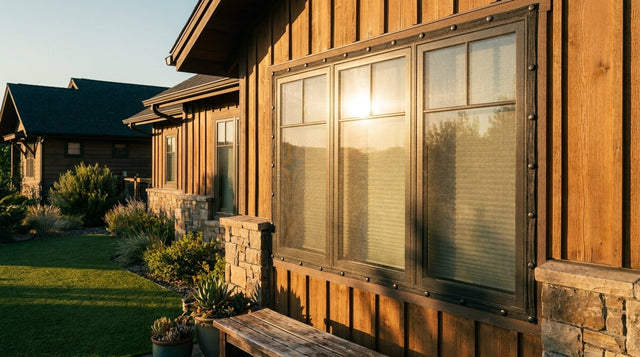
EZ-Snap's shade fabric is Optical Grade Thermo-Weave™, and it comes in two characters. Black mesh is the heat-killer: it blocks up to 90% of the sun's heat while preserving a clear, glare-free outward view — the right call for west and south rooms where comfort beats brightness. White mesh lets noticeably more daylight through while still cutting heat and glare, which suits the rooms where you'd rather not dim the space.
A practical room-by-room starting point:
- West bedrooms and living rooms — black mesh. This is where the afternoon assault happens and where the 90% figure pays for itself.
- South-facing main rooms — black mesh on the glass that bakes, with white reserved for any window you want to keep airy.
- East bedrooms — black mesh to kill the dawn glare without blackout curtains; you keep the view, lose the 6 a.m. spotlight.
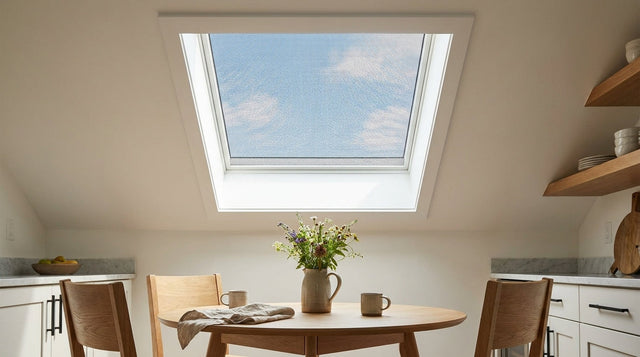
- North windows, kitchens, craft and reading rooms — white mesh, for daylight with the heat edge taken off.
Once you've matched a mesh to each room, you can build exterior shades for your windows one wall at a time.
For deeper material trade-offs and color swatches, the Shop House Window Shades collection lays out both mesh options side by side.
No drilling, no installer, one afternoon
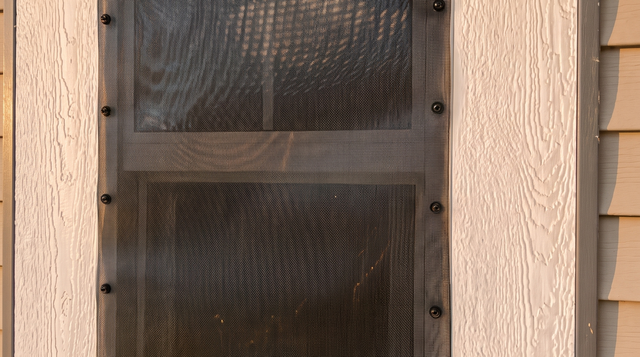
The reason whole-house exterior shading usually stalls is installation — historically it meant tracks, brackets, and a contractor drilling your siding. EZ-Snap removes that entirely with a patented, no-drill Cap & Pin snap system bonded by 3M™ VHB tape: no holes in your house, no installer's invoice. The pins adhere with VHB that sets in roughly 60 seconds per stud and reaches full strength in about 72 hours at a ~60°F cure, and the mesh cuts to any window shape with ordinary scissors without fraying. If the mechanism is new to you, the no-drill snap shade system is explained step by step elsewhere on the blog.
That's what makes the room-by-room plan realistic rather than aspirational. You can do the brutal west wall this weekend, the south windows the next, and add the bedrooms whenever the budget allows — each window installs in an afternoon, and kits start at $66.95 with free shipping over $225. If you want to see the snap mechanism before you commit, the how-it-works walkthrough shows the full sequence.
What the shading actually buys you back
This isn't a comfort-only upgrade. Heat gain and loss through windows account for a substantial share of a home's heating and cooling energy, so the glass you treat is glass that stops feeding the AC.4 Trim the solar load on your worst-exposed rooms and the whole cooling system works less to hold the same temperature — quieter afternoons, lower peak draw, less of that 4 p.m. west-room misery.
EZ-Snap has been building exterior shading and skirting this way since 2006, with more than 38,000 customers and a Limited Lifetime materials warranty behind the fabric. The same no-drill thinking carries across the line — from these house shades to RV skirting in Diamond Weave™ that trims heating and propane use up to 40% in winter. Start with the wall the sun hits hardest, choose the mesh that fits the room, and let the rest of the house follow one window at a time.
Sources
- "Exterior shutters and shades... are most effective at reducing solar heat gain." The page also states window awnings can reduce solar heat gain by up to 65% on south-facing windows and 77% on west-facing windows. U.S. Department of Energy (Energy Saver), 2024 ↗
- "Exterior window attachments block solar heat before it reaches the window." Interior attachments "can be less effective at reducing heat gain than comparable exterior shading systems because they do not block direct sunlight until after it has already passed through the window." DOE Building America Solution Center (Pacific Northwest National Laboratory), 2023 ↗
- "Depending on the material used, solar screens have the potential to block up to 90% of solar heat gain before it even reaches the window." U.S. Department of Energy, Office of Energy Efficiency & Renewable Energy (EERE), 2023 ↗
- "Heat gain and heat loss through windows are responsible for 25%-30% of residential heating and cooling energy use." U.S. Department of Energy — Energy Saver, 2024 ↗
- SHGC is "the fraction of solar radiation admitted through a window, door, or skylight — either transmitted directly and/or absorbed, and subsequently released as heat inside a home"; a low-SHGC product "is more effective at reducing cooling loads during the summer by blocking heat gain from the sun." U.S. Department of Energy — Energy Saver, 2024 ↗
- Windows "are known as the weakest link in the thermal envelopes" and are "attributable for approximately 10% of building energy use"; though only ~8% of envelope area, they can contribute "up to 45% of the envelope heat loss" in climate zones 4 and 5. Lawrence Berkeley National Laboratory — Windows & Daylighting, 2023 ↗
Common questions
What are the best window shades to block heat from outside?
Exterior window shades are the most effective way to reduce solar heat gain because they intercept the sun before it reaches the glass. Interior blinds only react after sunlight has already passed through and become heat inside the room. The U.S. Department of Energy ranks exterior shutters and shades as the most effective option for reducing solar heat gain.
How much heat do exterior window shades block?
Black Optical Grade Thermo-Weave mesh blocks up to 90% of solar heat while keeping a clear, glare-free view. White mesh lets in noticeably more daylight with less heat, for rooms where brightness matters. Depending on the material, exterior solar screens can block up to 90% of solar heat gain before it touches the glass.
Which windows should get black mesh versus white mesh?
Use black mesh on west and south rooms that bake in afternoon sun, and white mesh on north windows, kitchens, and reading spaces where you want the light. Black is the heat-killer that blocks up to 90% while keeping the view; white keeps rooms airy while still cutting heat and glare. Match the mesh to each room's exposure rather than treating the house as one box.
Which windows in a house get the hottest?
West-facing windows are the worst offenders, because low afternoon sun drives straight through the glass during the hottest hours. South-facing glass gets high, sustained sun all day but is more predictable, east windows bring hot mornings that cool by afternoon, and north windows get soft light with little direct gain. Start shading with the west wall.
Can you install exterior window shades without drilling?
Yes, a patented no-drill Cap and Pin snap system bonded with 3M VHB tape mounts each window with no holes in your house and no installer's invoice. The mesh cuts to any window shape with ordinary scissors without fraying, and each window installs in an afternoon. The tape sets in about 60 seconds per stud and reaches full strength in roughly 72 hours.
Do exterior shades actually lower cooling costs?
Shading your most sun-exposed glass reduces the load on the air conditioner, because heat gain and loss through windows drive a substantial share of a home's heating and cooling energy. Stop the sun outside the glass and the cooling system works less to hold the same temperature. Windows are the thermal weak link of the building, so treating the worst-exposed rooms pays back most.