Shade Screens for Windows: How They Work and How Much Heat They Really Block

- Shade screens for windows are a tightly woven exterior mesh that intercepts solar energy outside the glass, so that heat never crosses into the room.
- The U.S. Department of Energy names exterior shutters and shades most effective at reducing solar heat gain, because they stop sunlight before it reaches the glass.
- Interior blinds are less effective than exterior screens because they do not block direct sunlight until after it has already passed through the window.
- Depending on the material, exterior solar screens can block up to 90% of solar heat gain before it reaches the window glass.
- Black exterior mesh maximizes heat rejection and gives the clearest view out, while white mesh passes more daylight but rejects less heat, so choose by window exposure.
Key Takeaways
- Shade screens for windows are exterior mesh that intercepts solar heat before it reaches the glass — the U.S. Department of Energy calls exterior shading the most effective way to reduce solar heat gain.
- Because they stop sunlight outside the glass, exterior screens outperform interior blinds, which only act after heat has already passed through the window.
- Depending on the material, exterior solar screens can block up to about 90% of solar heat gain before it reaches the window; EZ-Snap®'s black Thermo-Weave mesh blocks up to 90% of the sun's heat.
- Black mesh maximizes heat rejection and view-through; white mesh passes more daylight but rejects less heat — choose by window exposure.
- EZ-Snap Sun Screen kits install in an afternoon with no drilling, using a patented Cap & Pin snap and 3M VHB adhesive, and cut to any window shape with scissors.
Stand outside on an August afternoon and put your palm flat against a sunlit window. The glass is warm, sometimes hot — and every bit of that warmth is already on its way inside, where your air conditioner will spend the rest of the day fighting to remove it. Shade screens for windows exist to settle that fight before it starts, by stopping the sun on the outside of the glass instead of arguing with it on the inside.
This is a piece about mechanism, not marketing. If you understand why exterior mesh works the way it does, you can judge any product — ours included — on its physics rather than its packaging. So let's start where the heat does.
Why the sun wins at the window
Glass is the soft spot in a house. Walls and roofs are insulated; windows are a thin transparent membrane that sunlight passes through almost unimpeded. The Department of Energy estimates that heat gain and heat loss through windows account for 25% to 30% of residential heating and cooling energy use.4 Lawrence Berkeley National Laboratory goes further, calling windows "the weakest link in the thermal envelopes" — only about 8% of a building's envelope area, yet responsible for up to 45% of envelope heat loss in some climate zones.7
Window people measure this with a number called SHGC — Solar Heat Gain Coefficient — defined as the fraction of solar radiation that gets admitted through a window and "subsequently released as heat inside a home."5 That last phrase is the whole problem in eight words. Once sunlight is through the glass, it has become heat that lives in your house. A low-SHGC window slows that down, but it cannot undo what light has already become indoors.
How shade screens for windows actually work
A window shade screen is a tightly woven mesh hung on the outside of the glass. It works by interception. Each tiny strand casts a tiny shadow, and the weave is engineered so those shadows overlap enough to absorb and reflect a large share of incoming solar energy — while the open spaces between strands still let you see out and let daylight filter through. The portion the screen catches turns to heat in the mesh, where the open air carries it away. Crucially, none of that heat ever crosses the glass.
That outside placement is the entire trick. The DOE's Building America program is blunt about it: exterior window attachments "block solar heat before it reaches the window," while interior treatments "can be less effective... because they do not block direct sunlight until after it has already passed through the window."2 An inside blind can shade your eyes, but the heat is already in the room behind it — the same reason we walk through outdoor blinds versus exterior shade mesh when people ask which approach actually survives the sun.
An interior shade fights heat that's already inside; an exterior screen never lets it in.
This is why the DOE names exterior shutters and shades as "most effective at reducing solar heat gain."1 Depending on the material, exterior solar screens "have the potential to block up to 90% of solar heat gain before it even reaches the window."3 Our black mesh — EZ-Snap Sun Screen's Optical Grade Thermo-Weave™ — is built to that ceiling, blocking up to 90% of the sun's heat at the glass.
Black mesh or white: what the color changes
The single most common question about exterior shade screens is color, and the answer is genuinely about how you weigh two things: heat rejection versus daylight.
- Black mesh absorbs incoming light and re-radiates that heat outward into the open air. It is the more aggressive heat blocker — up to 90% of solar heat — and from inside it tends to "disappear," giving you the clearest, least-tinted view out.
- White mesh reflects more light, so it stays brighter and passes more daylight into the room. The trade is that it rejects less heat than black.
A west-facing kitchen that cooks every evening wants black. A north room where you'd rather keep the light wants white. There's no universally correct answer — only the right answer for that window's exposure, which is exactly why it helps to think it through as a room-by-room heat-control plan rather than one blanket choice for the whole house. (For broader guidance on placement and exposure, our exterior shade collection is organized around exactly these decisions.)
The install: an afternoon, a pair of scissors
Here's where most exterior shading historically lost people. Awnings and roller systems can demand brackets, drilling, and a contractor. Our window shade screens were designed around a patented no-drill snap system using a Cap & Pin fastener and 3M™ VHB adhesive instead — no holes in your siding, no installer.
The mesh cuts to any window shape with household scissors and won't fray at the edge, so bays, arches, and odd custom shapes are no obstacle. The VHB cure is the one place to slow down and respect the chemistry: it sets in about 60 seconds per stud, reaches full strength at about 72 hours, ideally above 60°F. Plan the job for a mild, dry afternoon and let the adhesive do its work overnight before you tension anything hard.
What to expect once it's up
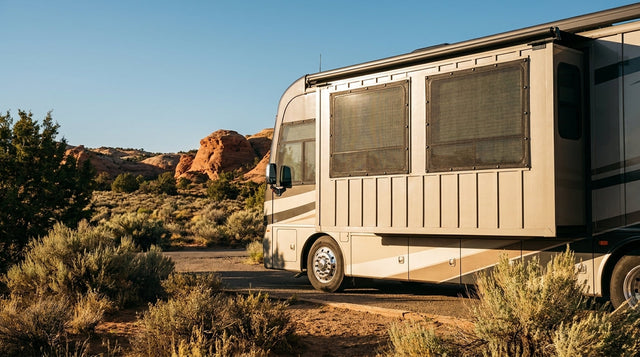
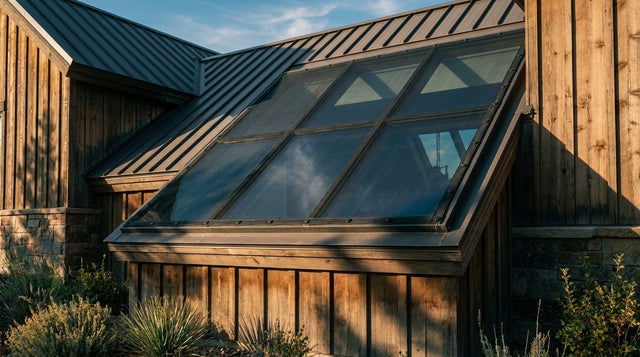
Inside, the change is felt before it's seen: the radiant "hot spot" near a sunny window fades, surfaces stop baking, and the AC cycles less because there's less heat to chase. The same exterior-mesh principle scales beyond house windows — to RV windows, skylights, and boats — which is why you'll find dedicated kits across the line. And in the off-season, the screens come down as easily as they went up.
Where shade screens fit in the bigger picture
Exterior shading isn't a gadget; it's the part of building science that's been hiding in plain sight. The DOE's own hierarchy puts blocking sunlight before the glass at the top of the list for cutting cooling load,6 ahead of the interior fixes most people reach for first. A shade screen is simply the most accessible, lowest-commitment way to act on that — no replacement windows, no construction.
EZ-Snap has built exterior covers since 2006 and served more than 38,000 customers, and every Sun Screen kit carries a Limited Lifetime materials warranty; kits start at $66.95 with free shipping over $225. If you're weighing options for a specific room, start with the Shop the Sun Screen Kit page and match the mesh color to the window's exposure. The physics will do the rest.
Sources
- "Exterior shutters and shades... are most effective at reducing solar heat gain." The page also states window awnings can reduce solar heat gain by up to 65% on south-facing windows and 77% on west-facing windows. U.S. Department of Energy (Energy Saver), 2024 ↗
- "Exterior window attachments block solar heat before it reaches the window." Interior attachments "can be less effective at reducing heat gain than comparable exterior shading systems because they do not block direct sunlight until after it has already passed through the window." DOE Building America Solution Center (Pacific Northwest National Laboratory), 2023 ↗
- "Depending on the material used, solar screens have the potential to block up to 90% of solar heat gain before it even reaches the window." U.S. Department of Energy, Office of Energy Efficiency & Renewable Energy (EERE), 2023 ↗
- "Heat gain and heat loss through windows are responsible for 25%-30% of residential heating and cooling energy use." U.S. Department of Energy — Energy Saver, 2024 ↗
- SHGC is "the fraction of solar radiation admitted through a window, door, or skylight — either transmitted directly and/or absorbed, and subsequently released as heat inside a home"; a low-SHGC product "is more effective at reducing cooling loads during the summer by blocking heat gain from the sun." U.S. Department of Energy — Energy Saver, 2024 ↗
- Exterior shutters and shades "are most effective at reducing solar heat gain," and exterior awnings can "reduce solar heat gain in the summer by up to 65% on south-facing windows and 77% on west-facing windows." U.S. Department of Energy — Energy Saver, 2024 ↗
- Windows "are known as the weakest link in the thermal envelopes" and are "attributable for approximately 10% of building energy use"; though only ~8% of envelope area, they can contribute "up to 45% of the envelope heat loss" in climate zones 4 and 5. Lawrence Berkeley National Laboratory — Windows & Daylighting, 2023 ↗
Common questions
How do exterior shade screens block heat?
Exterior shade screens block heat by intercepting sunlight outside the glass before it can enter. The tightly woven mesh hangs on the outside of the window, and each strand casts overlapping shadows that absorb and reflect a large share of incoming solar energy while open air carries that heat away. Because the heat never crosses the glass, the Department of Energy calls exterior shading the most effective way to reduce solar heat gain.
How much heat do window shade screens actually block?
Depending on the material, exterior solar screens can block up to about 90% of solar heat gain before it reaches the window. EZ-Snap's black Thermo-Weave mesh is built to that ceiling, blocking up to 90% of the sun's heat right at the glass.
Are exterior shade screens better than interior blinds?
Yes, exterior screens outperform interior blinds because they stop sunlight before it enters, while a blind only acts after heat has already passed through the glass. An interior shade fights heat that is already in the room; an exterior screen never lets it in. That is why the Department of Energy ranks exterior shading at the top for cutting cooling load.
Should I choose black or white shade screen mesh?
Choose by the window's sun exposure. Black mesh is the more aggressive heat blocker, rejecting up to 90% of solar heat and nearly disappearing for a clear view out, while white mesh passes more daylight but rejects less heat. A west-facing room that bakes every evening wants black; a north room where you would rather keep the light wants white.
How are shade screens installed, and can I cut them to fit odd windows?
They install with a patented no-drill snap, using a Cap and Pin fastener and 3M VHB adhesive instead of holes in your siding. The mesh cuts to any window shape with household scissors and won't fray, so bays, arches, and custom shapes are no obstacle. Most kits go up in an afternoon: the VHB sets in about 60 seconds per stud and reaches full strength in roughly 72 hours.