Sailboat Cabin Shades: No-Drill Sun Protection for Below Deck

Key Takeaways
- Exterior shading is the most effective way to reduce solar heat gain, because it blocks the sun before it reaches the glass — interior curtains only react after the heat is already inside.
- EZ-Snap® Sun Screen kits mount with a patented no-drill Cap & Pin snap and 3M VHB adhesive, so a sailboat cabin gets shaded with no holes drilled into gelcoat or deck.
- Black Optical Grade Thermo-Weave mesh blocks up to 90% of solar heat; white mesh trades heat rejection for more daylight below deck.
- The mesh cuts to any window shape with ordinary scissors without fraying, fitting oval portlights, the companionway, and overhead hatches in an afternoon.
- Kits start at $66.95 with free shipping over $225, backed by EZ-Snap's Limited Lifetime materials warranty and 38,000+ customers since 2006.
There is a particular hour on a sunny day at anchor when the cabin stops being a refuge and starts being a kiln. The cushions go warm to the touch, the chart table glows, and the whole space below deck holds the day's heat like a held breath. Portlights and the companionway are the culprits — small panes of glass that quietly turn your saloon into a greenhouse.
The fix is not more fans, and it is not a new air conditioner you cannot run at anchor anyway. The fix is geometry: stop the sunlight before it ever touches the glass. That is the entire premise behind exterior sailboat cabin shades, and it is also, conveniently, the conclusion the U.S. Department of Energy reaches about window heat — that exterior shutters and shades are the most effective way to reduce solar heat gain.1
Why a sailboat cabin overheats below deck
Glass is a one-way street for the sun. Shortwave solar radiation passes straight through a clear portlight, strikes your cushions and cabin sole, and re-radiates as longwave heat that cannot escape back out the same window. Engineers call the fraction that gets through the Solar Heat Gain Coefficient, and a low number means less of the sun's energy ends up trapped inside as heat.5 On a boat the effect is amplified: a cabin is small, tightly sealed, and surrounded by a hull that bakes in direct sun all day.
The same physics that makes windows the thermal weak link of a house applies below deck — glass moves heat in and out far out of proportion to its area.6 Your portlights and companionway hatch are small, but they are the open door the sun walks through.
Why exterior beats interior every time
Most sailors reach for an interior fix first — a curtain, a snap-in fabric panel, a bit of Reflectix wedged into the portlight. It helps a little, but it is fighting the war after the border has already been crossed. By the time sunlight has passed through the glass, the heat is inside; an interior shade can only re-radiate some of it back. The DOE is blunt on this point: exterior attachments block solar heat before it reaches the window, while interior treatments are less effective because they do not stop direct sunlight until after it has already come through.2 It is the same reason that, when you weigh boat window shades against blinds, where the treatment sits relative to the glass matters more than the material itself.
Shade the glass from the outside and you never let the heat aboard in the first place.
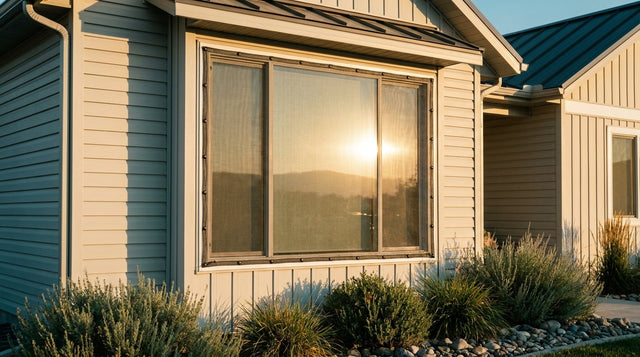
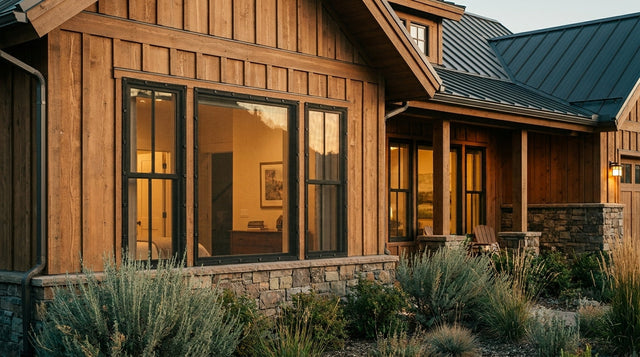
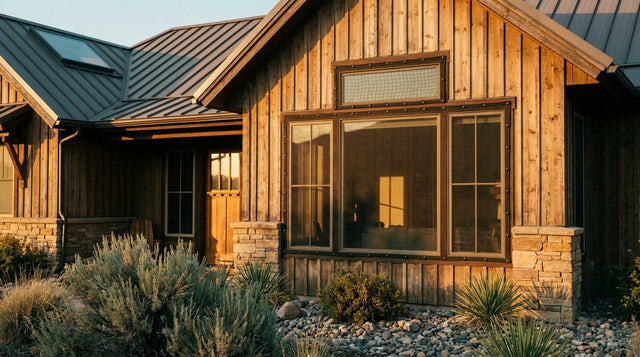
That is the whole game. Mounted outside the portlight, a solar mesh intercepts the sun's energy on the cabin top, in the open air, where the heat it absorbs blows away instead of pooling against your headliner. Depending on the material, exterior solar screens can block up to around 90% of solar heat gain before it reaches the window.3 It is the same approach behind boat window covers that block heat without drilling anywhere on the topsides.
The no-drill part — why it matters on a boat
Here is where boats differ from houses. On a house you can sink a screw anywhere and the worst case is a patched hole. On a hull or a cabin top, every fastener is a potential leak path, a future blister, a warranty argument. Drilling into gelcoat to mount a shade is the kind of decision you regret two seasons later when water is tracking down the inside of the liner.
EZ-Snap Sun Screen kits mount with a patented no-drill Cap & Pin snap backed by 3M VHB adhesive — no holes, no screws, no penetrations through your deck or coachroof. The VHB tabs press onto clean surfaces in about 60 seconds per stud, cure best above roughly 60°F, and reach full strength in about 72 hours. The mesh itself is an Optical Grade Thermo-Weave™ — the shade analog of the brand's Diamond Weave™ skirting fabric — and the black weave is what blocks up to 90% of solar heat, while white mesh trades some of that heat rejection for more daylight below.
If you want to see the snap mechanism in motion before committing, the how-it-works walkthrough shows the Cap & Pin going onto a surface step by step, and the same adhesive method carries straight over when you install boat window shades with no drilling across the rest of the cabin.
Fitting odd shapes: portlights, companionway, and hatches
The thing nobody tells you about marine glazing is that almost none of it is rectangular. Portlights are ovals, teardrops, and trapezoids; the companionway is its own awkward keystone; an overhead hatch is a square set into a curve. This is exactly where a cut-to-fit system earns its keep.
The Thermo-Weave™ mesh trims with ordinary scissors and does not fray at the cut edge, so you can template a shade to any window shape directly on the boat. A practical order of operations for sailboat portlight covers and the rest of the cabin:
- Portlights: mask the surrounding gelcoat, lay the mesh over the opening, and trim to the curve of the trim ring. Snap caps go on the mesh, pins on the cabin side.
- Companionway: the biggest single heat gain on most boats. A full panel here shades the drop boards and the whole stairwell of light.
- Overhead hatch: a sailboat hatch shade kills the worst vertical-sun gain at midday — and because the mesh is open weave, you keep airflow and a dimmed view of the sky.
The whole boat is realistically an afternoon's work with scissors and a clean rag. Kits start at $66.95, with free shipping over $225 — and EZ-Snap has been doing this since 2006 for more than 38,000 customers, backed by a Limited Lifetime materials warranty.
Light, view, and ventilation — the marine details
A solid cover would be cooler, but you would be living in a cave and trapping condensation. The reason mesh is the right answer below deck is that it shades without blinding you: black mesh holds back the heat while you keep a usable, dimmed view out and air moving through the weave. White mesh leans the other way — more light below, less heat rejection — which suits a nav station or galley where you want to read a chart. .
For most cruisers the move is black mesh on the sun-struck side and the companionway, white where you want working light. To spec a full set, start from the Shop Boat Shades collection, which covers the marine kits; sailors outfitting a trailer or tow vehicle in the same haul often pair them with the broader exterior shade range. When you are ready to build one, you can spec your sailboat shade kit to your exact portlights.
The payback below deck
Windows drive 25% to 30% of heating and cooling energy in a typical building, because every bit of solar gain through the glass is heat something has to remove.4 On a boat there is no "something" — there is just you, a fan, and a battery bank. Cutting the gain at the source means a cabin that is livable at anchor without burning amp-hours, and a saloon you actually want to nap in at two in the afternoon. Stop the sun at the glass, and the oven becomes a cabin again.
Sources
- "Exterior shutters and shades... are most effective at reducing solar heat gain." The page also states window awnings can reduce solar heat gain by up to 65% on south-facing windows and 77% on west-facing windows. U.S. Department of Energy (Energy Saver), 2024 ↗
- "Exterior window attachments block solar heat before it reaches the window." Interior attachments "can be less effective at reducing heat gain than comparable exterior shading systems because they do not block direct sunlight until after it has already passed through the window." DOE Building America Solution Center (Pacific Northwest National Laboratory), 2023 ↗
- "Depending on the material used, solar screens have the potential to block up to 90% of solar heat gain before it even reaches the window." U.S. Department of Energy, Office of Energy Efficiency & Renewable Energy (EERE), 2023 ↗
- "Heat gain and heat loss through windows are responsible for 25%-30% of residential heating and cooling energy use." U.S. Department of Energy — Energy Saver, 2024 ↗
- SHGC is "the fraction of solar radiation admitted through a window, door, or skylight — either transmitted directly and/or absorbed, and subsequently released as heat inside a home"; a low-SHGC product "is more effective at reducing cooling loads during the summer by blocking heat gain from the sun." U.S. Department of Energy — Energy Saver, 2024 ↗
- Windows "are known as the weakest link in the thermal envelopes" and are "attributable for approximately 10% of building energy use"; though only ~8% of envelope area, they can contribute "up to 45% of the envelope heat loss" in climate zones 4 and 5. Lawrence Berkeley National Laboratory — Windows & Daylighting, 2023 ↗
Common questions
How do you shade a sailboat cabin without drilling into the gelcoat?
Exterior sun screen mounts with a patented no-drill Cap and Pin snap backed by 3M VHB adhesive, so no holes or screws go into the gelcoat, deck, or coachroof. Each stud presses onto a clean surface in about 60 seconds and reaches full strength in roughly 72 hours. The mesh then trims to any portlight, hatch, or companionway shape with ordinary scissors.
Do exterior shades work better than interior curtains below deck?
Yes. Exterior shading blocks the sun before it reaches the glass, which the U.S. Department of Energy identifies as the most effective way to reduce solar heat gain. Interior curtains only react after the heat is already inside the cabin, so they can re-radiate some of it back but never stop it. Mounted outside, the mesh intercepts the sun's energy in open air where the heat blows away instead of pooling against the headliner.
Should you use black or white mesh on a sailboat?
Black mesh blocks up to 90% of solar heat and is the choice for sun-struck portlights and the companionway. White mesh trades some of that heat rejection for more daylight below, which suits a nav station or galley where you want working light to read a chart. Many cruisers run black on the hot side and white where they need brightness.
Can the mesh fit oval portlights and odd-shaped hatches?
Yes. The Thermo-Weave mesh cuts to any shape with ordinary scissors and does not fray at the edge, so you can template a shade directly on the boat. That covers oval and teardrop portlights, the keystone companionway, and overhead hatches. Snap caps go on the mesh and the pins on the cabin side.
How much do sailboat cabin shade kits cost?
Kits start at $66.95, with free shipping over $225. They are backed by a Limited Lifetime materials warranty from EZ-Snap, which has been doing no-drill exterior shading since 2006 for more than 38,000 customers.
How long does it take to shade a whole sailboat cabin?
Realistically an afternoon's work with scissors and a clean rag. The VHB tabs place in about 60 seconds per stud and cure best above roughly 60 degrees Fahrenheit. Shade the sun-struck portlights and the companionway first, since the companionway is the single biggest heat gain on most boats.