Sunroom Too Hot? Exterior Shades for Sunrooms and Enclosed Porches

Key Takeaways
- Exterior shading is the U.S. Department of Energy's most effective option for reducing solar heat gain, because it blocks the sun before it reaches the glass.
- Interior blinds intercept sunlight only after it has passed through the window, so they cut glare but do little for trapped heat.
- Depending on the mesh material, exterior solar screens can block up to 90% of solar heat gain before it reaches the window.
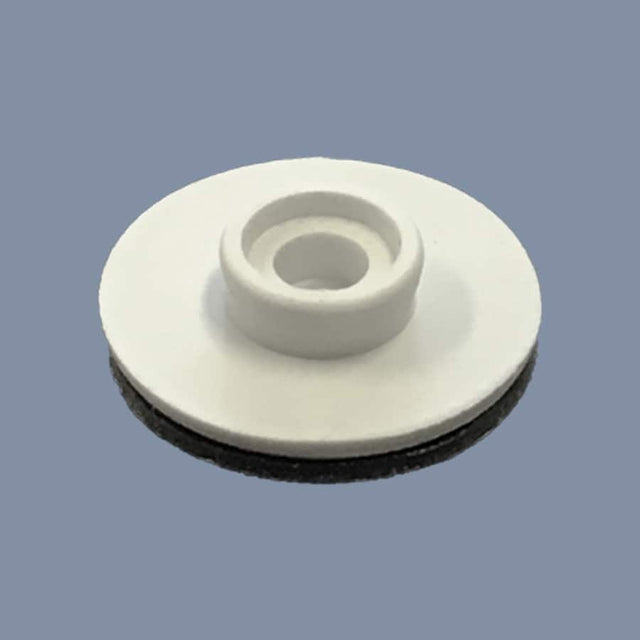
- EZ-Snap® Sun Screen uses Optical Grade Thermo-Weave mesh and a patented no-drill Cap & Pin snap system that mounts with 3M VHB tape — no holes in your sunroom frames.
- The mesh cuts to any window shape with scissors without fraying, so transoms, arches, and angled sunroom panels are all coverable in an afternoon.
By three in the afternoon, a glass room stops being a room and becomes a greenhouse. The same walls of windows that made your sunroom worth building are now pouring afternoon sun straight onto the floor, the furniture, and you — and the air conditioner is losing the argument. This is the sunroom paradox, and the fix is not thicker glass or another fan. It is stopping the heat outside, before it ever touches the pane.
Most people reach for interior blinds first, because that is what's familiar. But by the time you're drawing a shade on the inside, the sun has already done its work. The fix lives on the other side of the glass.
Why your sunroom turns into an oven
A sunroom is, in thermal terms, a worst-case scenario stacked on a worst-case scenario. Windows are already the weakest link in any building's envelope — though glazing is only about 8% of a typical exterior surface, it can account for as much as 45% of the heat moving through it.7 Heat gain and loss through windows drive roughly 25–30% of a home's heating and cooling energy use.4 Now build a room that is almost entirely window, point it at the sky, and you've concentrated the building's biggest weakness into a single space.
What actually happens is described by a number called SHGC — solar heat gain coefficient — the fraction of solar radiation that passes through the glass and is then released as heat inside the room.5 Once that energy is indoors, it's trapped. Your AC isn't fighting the sun anymore; it's fighting the heat the sun already deposited on your tile floor and wicker chairs. That's why the room feels stuffy even with the unit running hard.
Inside the glass is already too late
Here's the part that surprises people. Interior shades and blinds can soften the light, but they're poor at cutting heat, because they don't intercept sunlight until after it has already passed through the window.2 The energy is in the room by then. The shade just absorbs it and re-radiates it back at you a few feet closer. This is exactly the split that shows up when you weigh outdoor window blinds against exterior shade mesh — where you intercept the sun matters more than the material itself.
Exterior attachments work differently: they block solar heat before it reaches the window.2 The U.S. Department of Energy is unambiguous that exterior shutters and shades are the most effective option for reducing solar heat gain.1
Stop the sun at the glass, not after it's already in the room.
This is the whole principle behind exterior mesh, and it's why a thin screen on the outside outperforms a heavy curtain on the inside. Depending on the material, exterior solar screens can block up to 90% of solar heat gain before it even reaches the window.3 That's not a marginal improvement over interior blinds — it's a different category of result, and it's worth understanding how shade screens actually work before you commit to a color.
What exterior mesh actually does to the room
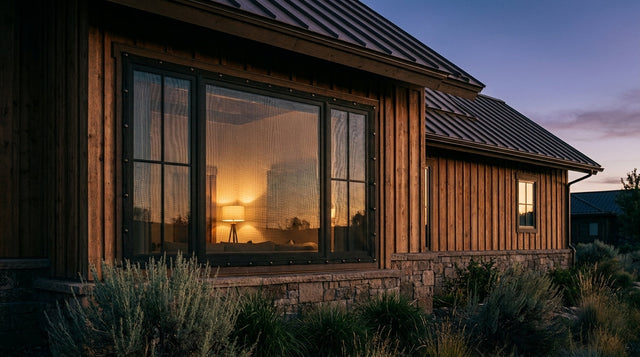
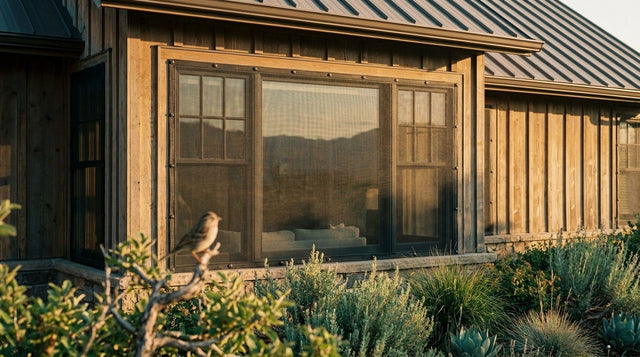
EZ-Snap Sun Screen is built from Optical Grade Thermo-Weave™ mesh — a tight, see-through weave engineered to absorb and dissipate solar energy on the outside of the glass. In black, the mesh blocks up to 90% of the solar heat, which is the configuration most sunroom and porch owners want when the goal is taming an afternoon oven. You still see out; the view doesn't disappear behind a wall of fabric. It reads more like a pair of sunglasses for the room than a curtain.
If your priority is keeping the space bright — say an enclosed porch you use as a reading nook — the white mesh lets more light through while still cutting glare and heat. It's a trade you make per window, depending on what each one is for. Many people run black on the brutal west-facing glass and white where the light is gentler.
Cuts to any window shape
Sunrooms rarely have tidy rectangular windows. There are transoms, trapezoids, arched tops, and the awkward angled panels where the roofline meets the wall. Thermo-Weave™ cuts to any shape with ordinary scissors and won't fray at the edges, so the odd geometry that defeats off-the-shelf blinds is no obstacle here. If you can trace it, you can cover it.
The no-drill part — why it matters on a sunroom
Sunrooms and patio enclosures are usually framed in aluminum or vinyl, with seals you do not want to puncture. EZ-Snap's patented Cap & Pin snap system mounts with no drilling — it bonds using 3M™ VHB tape, so there are no screw holes through your frames and no compromised weather seals.
- Roughly 60 seconds per stud to place the snaps, working around the frame.
- The 3M™ VHB adhesive reaches full strength in about 72 hours and wants a surface around 60°F or warmer to cure properly.
- No special tools — the whole job is scissors, snaps, and the mesh.
Most people get a sunroom or enclosed porch done in an afternoon. The system was designed for DIY RV owners who'd otherwise pay for custom shade work, which means it forgives mistakes and doesn't demand a contractor. The same approach scales from a single hot window to a full wall of glass — see how the no-drill snap shade system works if you want the step-by-step before you measure.
Choosing the right setup for your space
A few practical notes for sunroom and enclosed porch window shades specifically:
- Map your worst windows first. West and south faces take the most punishing load — DOE notes exterior treatments can cut solar heat gain dramatically on exactly those orientations.6 Start there.
- Match mesh color to use. Black for heat-dominated rooms you want cooler; white where you're chasing comfort without going dark.
- Think in panels, not one giant sheet. Per-window covers are easier to handle, easier to cut, and let you mix colors across the room. When you’re ready, build your exterior window shade kit one opening at a time.
EZ-Snap has been making this exact kind of no-drill exterior shading since 2006, with more than 38,000 customers and a Limited Lifetime materials warranty on the mesh — so the screen you put up this summer isn't a disposable seasonal fix. Kits start at $66.95, and shipping is free over $225. If you're outfitting a whole sunroom, browse the Shop Exterior Shades collection to size it out, and if your enclosure shares walls with the rest of the house, the same approach covers ordinary sun shades for windows elsewhere on the building — the same room-by-room logic behind outside window shades for the whole house. Skylights in a sunroom roof are their own battle — those get the harshest, most direct sun of all, and the skylight shade kits are built for that overhead angle.
The goal isn't to darken your favorite room. It's to make it usable again at the hour you most want to sit in it — by catching the sun on the outside of the glass, where stopping it actually counts.
Sources
- "Exterior shutters and shades... are most effective at reducing solar heat gain." The page also states window awnings can reduce solar heat gain by up to 65% on south-facing windows and 77% on west-facing windows. U.S. Department of Energy (Energy Saver), 2024 ↗
- "Exterior window attachments block solar heat before it reaches the window." Interior attachments "can be less effective at reducing heat gain than comparable exterior shading systems because they do not block direct sunlight until after it has already passed through the window." DOE Building America Solution Center (Pacific Northwest National Laboratory), 2023 ↗
- "Depending on the material used, solar screens have the potential to block up to 90% of solar heat gain before it even reaches the window." U.S. Department of Energy, Office of Energy Efficiency & Renewable Energy (EERE), 2023 ↗
- "Heat gain and heat loss through windows are responsible for 25%-30% of residential heating and cooling energy use." U.S. Department of Energy — Energy Saver, 2024 ↗
- SHGC is "the fraction of solar radiation admitted through a window, door, or skylight — either transmitted directly and/or absorbed, and subsequently released as heat inside a home"; a low-SHGC product "is more effective at reducing cooling loads during the summer by blocking heat gain from the sun." U.S. Department of Energy — Energy Saver, 2024 ↗
- Exterior shutters and shades "are most effective at reducing solar heat gain," and exterior awnings can "reduce solar heat gain in the summer by up to 65% on south-facing windows and 77% on west-facing windows." U.S. Department of Energy — Energy Saver, 2024 ↗
- Windows "are known as the weakest link in the thermal envelopes" and are "attributable for approximately 10% of building energy use"; though only ~8% of envelope area, they can contribute "up to 45% of the envelope heat loss" in climate zones 4 and 5. Lawrence Berkeley National Laboratory — Windows & Daylighting, 2023 ↗
Common questions
How do you cool down a sunroom that gets too hot?
Stop the sun on the outside of the glass with exterior shade mesh, which the U.S. Department of Energy calls the most effective option for reducing solar heat gain. Depending on the material, exterior solar screens can block up to 90% of solar heat before it reaches the window. Interior blinds only intercept sunlight after it has already passed through the glass, so they cut glare but do little about the trapped heat.
Do interior blinds help with sunroom heat?
Not much. Interior blinds soften light but are poor at cutting heat, because they do not intercept sunlight until after it has already passed through the window. By then the energy is in the room, and the blind just absorbs it and re-radiates it back a few feet closer. Exterior mesh works differently by blocking the heat before it reaches the glass.
Can exterior shades fit arched or angled sunroom windows?
Yes. The Thermo-Weave mesh cuts to any shape with ordinary scissors and won't fray at the edges, so transoms, trapezoids, arched tops, and the awkward angled panels where the roofline meets the wall are all coverable. If you can trace it, you can cover it.
Will exterior sunroom shades damage aluminum or vinyl frames?
No. The patented Cap and Pin snap system mounts with no drilling, bonding with 3M VHB tape, so there are no screw holes through the frames and no compromised weather seals. Snaps place in roughly 60 seconds each and reach full strength in about 72 hours, curing best around 60 degrees Fahrenheit or warmer.
Should you choose black or white mesh for a sunroom or porch?
Black mesh blocks up to 90% of the solar heat and is best for taming an afternoon oven, especially on brutal west-facing glass. White mesh lets more light through while still cutting glare and heat, which suits an enclosed porch used as a bright reading nook. It's a trade you make per window depending on what each one is for.
How much do exterior sunroom shade kits cost and how long is the install?
Kits start at $66.95, with free shipping over $225, and carry a Limited Lifetime materials warranty. Most sunrooms and enclosed porches get done in an afternoon with just scissors, snaps, and the mesh. EZ-Snap has made this no-drill exterior shading since 2006 for more than 38,000 customers.