House Skirting Ideas: 9 Foundation Covering Options Compared
- House skirting does four jobs: concealing the underfloor structure, excluding pests and debris, protecting exposed plumbing, and, in sealed insulated versions, reducing heat loss through the floor.
- The U.S. Department of Energy lists insulated skirting and belly sealing among the improvements that substantially reduce heat loss in manufactured homes.
- Masonry and vinyl skirting look finished but rarely insulate, and a vented vinyl panel deliberately lets outside air wash through the crawlspace.
- Lattice and plywood are the cheapest options, but an open weave offers zero thermal benefit and plywood wicks ground moisture, rots, and warps unless meticulously sealed.
- A sealed, no-drill insulated fabric enclosure traps a still-air buffer against the underside of the floor, and EZ-Snap® reports heating and propane savings of up to 40%.
Key Takeaways
- House skirting does four jobs — concealment, pest and debris exclusion, plumbing protection, and reducing floor heat loss — and the materials are not interchangeable.
- The U.S. Department of Energy lists insulated skirting and belly sealing among the improvements that substantially cut heat loss in raised and manufactured homes.
- Masonry and vinyl skirting look finished but rarely insulate; vented vinyl deliberately lets outside air wash through the crawlspace.
- A sealed, no-drill insulated fabric enclosure traps a still-air buffer; EZ-Snap reports heating and propane savings of up to 40%.
- Exposed, uninsulated pipes begin to freeze around 20°F because they rely on the home's heat, so a sealed skirted perimeter protects the most vulnerable plumbing.
There is a moment, walking up to a house on piers, when your eye drops to the gap beneath the floor and the whole structure suddenly looks like it is hovering on stilts. That dark band of open air is the single most overlooked surface on a raised home, and closing it well does more than tidy the silhouette — it changes how the floor feels in January and how the crawlspace breathes in July.
House skirting is the panel system that wraps the gap between the bottom of your siding and the ground. People reach for it to hide piers, block out animals and wind-blown leaves, and — increasingly — to slow heat loss through the floor. The catch is that "skirting" covers a dozen very different products, from poured masonry to clip-on fabric, and they are not remotely interchangeable. Below is a clear-eyed comparison of the real options, ranked by what they cost you and what they actually do.
What is the best skirting for a house foundation?
The best house skirting depends on the job. For permanence and curb appeal on a stationary home, masonry like brick or stone wins. For the lowest sticker price, lattice does the cosmetic work. But for a heated, raised home in a cold climate, a removable insulated enclosure that seals the perimeter and traps still air delivers the most value, because the gap is functionally an uninsulated wall.
What house skirting is actually for
Before you pick a material, get honest about the job. Skirting does four things, and most homeowners want a different blend of them. It conceals the underfloor structure. It keeps critters, debris, and standing wind out of the crawlspace. It protects exposed plumbing. And — the part people underrate — it can create a still-air buffer that reduces heat loss through the floor.
That last function is not marketing fluff. The U.S. Department of Energy lists installing insulated skirting and sealing the belly cavity among the improvements that substantially reduce heat loss in manufactured homes.1 The mechanism is simple: a continuous enclosure traps a calm layer of air against the underside of the floor, and still air is a remarkably good insulator. The DOE's own weatherization guidance frames the goal as a "consistent thermal boundary between conditioned and unconditioned space."2
The gap under your floor is not decoration waiting to be hidden — it is an uninsulated wall you forgot to build.
The masonry tier: brick, block, and stone
At the top of the permanence ladder sit brick, concrete block, and stone veneer. These read as foundation, not skirting, and that is their appeal — a brick curtain wall makes a piered house look like it was poured in place. They shrug off impacts, never sag, and last for the life of the home.
The trade-offs are equally blunt. Masonry is the most expensive option by a wide margin, it usually requires a footing and a mason, and it is effectively permanent. On a home that moves — anything on piers in freeze-thaw country — rigid masonry can crack as the ground heaves. It also gives you almost no access. When a pipe needs work, you are not popping a panel; you are removing a wall.
The mid tier: vinyl, faux-stone, and metal panels
This is where most stock house skirting lives. Vinyl skirting panels slot into a track system and are the default on manufactured homes for a reason: cheap, light, and DIY-friendly. Faux-stone and faux-brick foam panels imitate masonry at a fraction of the weight and price. Metal and fiber-cement panels split the difference on durability.
Vinyl's weakness is brittleness. In hard cold it cracks; in hard sun it fades and warps; and high winds love to pop panels out of their track. Faux-stone foam looks convincing from the curb but dents under a stray lawnmower stone. As a class these are fine middle-of-the-road exterior house skirting options — just don't expect them to insulate. A vented vinyl panel deliberately lets outside air wash through the crawlspace, which is the opposite of a still-air buffer.
The cheap-and-natural tier: lattice, plywood, and foam board
If you want the lowest-cost path, this is it. Wood or vinyl lattice is the classic cheap house skirting move — airy, fast to cut, and easy on the wallet. Pressure-treated plywood is cheaper still and fully solid. Rigid foam board sandwiched behind a facing panel is the budget insulation play.
- Lattice: attractive and breathable, but the open weave invites animals, blowing snow, and zero thermal benefit.
- Plywood: solid and dirt-cheap, but it wicks ground moisture, rots, and warps unless meticulously sealed.
- Foam board: real R-value, but UV-fragile and ugly on its own, so it always needs a protective face.
The through-line: cheap materials almost always trade away either durability or thermal performance, and frequently both. They look fine the first season. Ask again after two winters.
The performance tier: no-drill insulated fabric
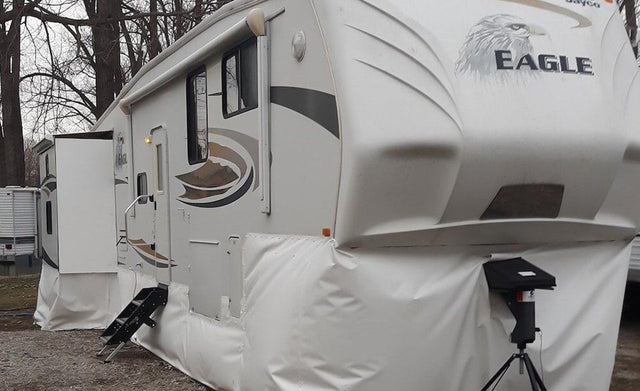
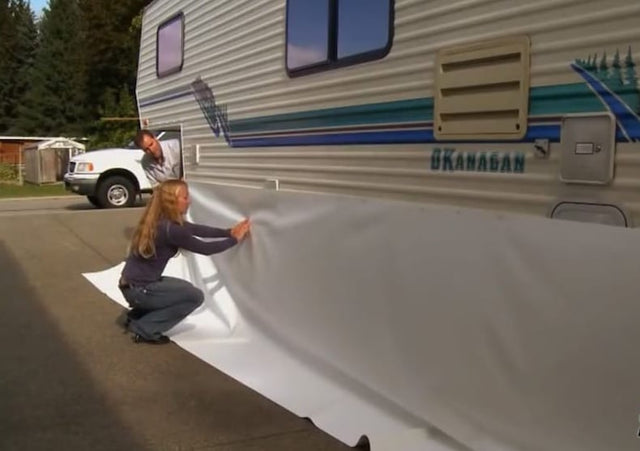
The newest category treats skirting as an engineered enclosure rather than a wall. EZ-Snap's Diamond Weave™ skirting fabric is a tensioned panel that snaps to the home without drilling into the siding, using a patented Cap & Pin snap so vinyl and fiber-cement walls stay intact. Homeowners can shop the no-drill house foundation skirting kit for stick-built and manufactured homes. This is the same approach to covering a foundation gap without drilling into siding that works on stick-built and manufactured homes alike. The fabric flexes with seasonal movement instead of cracking, and it can be removed and re-snapped for crawlspace access in minutes.
The point of a sealed fabric enclosure is the still-air buffer the DOE keeps pointing to — the company reports heating and propane savings of up to 40% from that trapped layer of calm air. That enclosure also shelters the most freeze-vulnerable parts of the house. The DOE notes that exposed, uninsulated pipes start having trouble around 20°F because they rely on the home's heat rather than their own insulation.3 A skirted, sealed perimeter keeps that under-floor zone meaningfully warmer than open air — the same reasoning behind tiny home skirting that holds up in cold climates. EZ-Snap has built this approach since 2006 and backs the material with a Limited Lifetime warranty; you can Explore EZ-Snap skirting to see how the no-drill system handles RVs, tiny homes, decks, and raised foundations.
House skirting options compared
| Option | Insulates (still-air buffer) | No-drill install | Removable for access | Relative cost |
|---|---|---|---|---|
| Masonry (brick / block / stone) | No | No | No | $$$ |
| Vinyl / faux-stone panels | No — often vented | No | Limited | $$ |
| Lattice / plywood | No | No | Limited | $ |
| Foam board (faced) | Yes — needs a face | No | No | $$ |
| No-drill insulated fabric (EZ-Snap) | Yes — sealed enclosure | Yes | Yes | $$ |
How to choose: match the material to the job
Run your decision through three questions. First, do you need access? If pipes, valves, or storage live under there, anything you have to demolish to open is the wrong answer. Second, do you live where it gets cold? If the floor goes icy in winter, a vented or open option is actively working against you, and an insulated enclosure pays for itself in fuel. Third, what is your honest budget for the next decade, not just install day?
For pure curb appeal on a stationary home in a mild climate, masonry or faux-stone is hard to beat. For the lowest sticker price, lattice does the cosmetic job. But if the gap under your floor is functionally an uninsulated wall — and for any heated, raised home, it is — the smart spend is a removable, insulating enclosure that seals the perimeter and survives the seasons. The logic carries over to adjacent structures too, from a no-drill, removable underdeck panel to a screened porch.
One last note that applies across every tier: skirting is a system, not just a face. Pair whatever you choose with belly sealing and proper drainage so you are trapping calm air, not moisture. The same logic that makes our exterior shade mesh manage heat at the window applies under the floor — control the air, control the comfort. Done right, that forgotten band of shadow under your house turns into one of the best-performing surfaces you own.
Sources
- DOE lists "Install insulated skirting" and "Add insulation to the belly" among the energy-efficiency improvements that substantially reduce heat loss in manufactured homes; it also recommends air sealing openings around plumbing and ducts. U.S. Department of Energy (Energy Saver), 2024 ↗
- DOE/NREL Weatherization job aid 15-1 directs installers to fill the entire belly cavity to the prescribed R-value 'while ensuring plumbing has sufficient insulation value to prevent condensation or freezing,' creating a 'consistent thermal boundary between conditioned and unconditioned space,' and to reinstall any removed skirting. U.S. Department of Energy / National Renewable Energy Laboratory (Weatherization Assistance Program, Job Aid 15-1), 2024 ↗
- Southern states generally start having issues with frozen pipes when the temperature reaches about 20 degrees Fahrenheit; bathroom and kitchen pipes are generally not insulated and rely on the heating system to keep warm. U.S. Department of Energy (Energy Saver), 2024 ↗
Common questions
What is the best skirting for a house foundation?
The best house skirting depends on the job you need it to do. For permanence and curb appeal on a stationary home, masonry like brick or stone wins, while lattice does the cheapest cosmetic work. But for a heated, raised home in a cold climate, a removable insulated enclosure that seals the perimeter and traps still air delivers the most value, because that gap is functionally an uninsulated wall.
Does house skirting actually help with insulation and heat loss?
Yes, but only sealed, insulating skirting does. The U.S. Department of Energy lists insulated skirting and belly sealing among the improvements that substantially reduce heat loss in manufactured homes, because a continuous enclosure traps a calm layer of still air against the underside of the floor. Masonry, plain vinyl, and lattice do not insulate, and vented vinyl deliberately lets outside air wash through the crawlspace.
What are the cheapest house skirting options?
Lattice and pressure-treated plywood are the lowest-cost house skirting options. Wood or vinyl lattice is airy, fast to cut, and easy on the wallet, while plywood is cheaper still and fully solid. The catch is that cheap materials trade away durability or thermal performance and often both: lattice offers zero thermal benefit and invites animals, and plywood wicks ground moisture, rots, and warps unless meticulously sealed.
At what temperature do exposed pipes under a house freeze?
Exposed, uninsulated pipes start having trouble around 20 degrees Fahrenheit, according to the U.S. Department of Energy. Bathroom and kitchen pipes are generally not insulated and rely on the home's heating system to stay warm, so a sealed, skirted perimeter keeps that under-floor zone meaningfully warmer than open air and shelters the most freeze-vulnerable plumbing.
Can you install house skirting without drilling into your siding?
Yes, a no-drill insulated fabric enclosure snaps to the home using a patented Cap and Pin snap, so vinyl and fiber-cement walls stay intact. EZ-Snap's Diamond Weave skirting is a tensioned panel that flexes with seasonal movement instead of cracking, and it can be removed and re-snapped for crawlspace access in minutes. The sealed still-air buffer is why the company reports heating and propane savings of up to 40 percent.