Covering a House Foundation Gap Without Drilling Into Siding
Key Takeaways
- No-drill snap skirting covers an open house, pier-and-beam, or crawlspace foundation gap using a patented Cap & Pin snap and 3M VHB adhesive — no screws or holes in the siding.
- The 3M VHB bond reaches full strength in about 72 hours, needs roughly 60 seconds of pressure per anchor, and cures best on a clean surface above about 60°F.
- The U.S. Department of Energy recommends insulated skirting and air-sealing the underbelly to substantially reduce heat loss in raised and manufactured homes.
- Skirting works by trapping a layer of still air against the foundation, which steadies floor temperature and shields plumbing — frozen-pipe risk can begin around 20°F.
- EZ-Snap®'s Diamond Weave fabric cuts to any shape with scissors without fraying, follows uneven grade, and unsnaps in spring to restore crawlspace ventilation.
There is a particular kind of cold that only people with an open foundation know — the draft that climbs up through the floorboards in January and turns the first room of the morning into a place you cross quickly, in socks, on the way to somewhere warmer. The fix is not a foundation. It is a curtain of still air, and you can hang it without drilling a single hole in your siding.
Most homes with an open underside fall into one of two shapes: a pier-and-beam house resting on block columns, or a structure with a vented crawlspace and a stubborn gap between the bottom of the siding and the ground. In both cases the wind treats that gap like an open window in winter. Skirting closes it. The question almost everyone asks first is the right one — how do you attach skirting without damaging the wall you are trying to protect?
Why the foundation gap costs you more than it looks
An exposed underbelly is a continuous thermal leak. The U.S. Department of Energy lists insulated skirting and underbelly insulation among the improvements that substantially reduce heat loss in manufactured homes, and it specifically recommends air-sealing the openings around plumbing and ducts.1 The logic carries over to any pier-and-beam or open-foundation house: the floor is the lid of an uncontrolled outdoor room, and every gust under there pulls warmth down and out.
The plumbing problem is more urgent than the comfort one. Exposed pipes under an open floor have no buffer. The DOE notes that frozen-pipe trouble can begin around 20°F, and that most household pipes rely on the home's heat to stay warm rather than on their own insulation.3 A skirted perimeter does not heat that space, but it stops the wind from stripping away the heat that leaks down naturally — turning a wind-scoured cavity into a calmer, milder one.
The no-drill method, in plain terms
This is the part that changes the project from a weekend of regret into a DIY job with scissors, no drilling, done at your own pace. EZ-Snap skirting attaches with a patented no-drill Cap & Pin snap backed by 3M VHB adhesive tape — the pin half bonds to your wall, the cap half holds the fabric, and the two snap together. No screws into siding, no holes to caulk later, no compromised cladding.
The bond does the structural work. The 3M VHB tape reaches full strength in roughly 72 hours, takes about 60 seconds of firm pressure per stud to set, and wants a surface above about 60°F while it cures. That is the whole trick: you are gluing small anchor points to clean siding, not perforating it. When spring comes and you want the airflow back, the panels unsnap and the wall underneath is untouched.
You are not building a wall. You are hanging a curtain of still air, and the wind never gets a vote.
What "no drill house skirting" actually requires
- A clean, dry surface. Wipe the siding where each pin lands; adhesion is everything here. You can get Diamond Weave material samples to test the fabric and bond on your own wall first.
- A warm enough day. Plan the install above the cure temperature, or warm the bond line — fall is ideal, well before the first freeze.
- Patience for the cure. Snap the panels, then let the tape reach strength before the first real wind test.
- Scissors, not a saw. The Diamond Weave™ fabric cuts to any odd run, around a porch step or a sloping grade, and the cut edges do not fray.
Skirting house foundation covering ideas that actually hold up
The most common mistake is treating skirting as a rigid panel problem. Rigid panels fight uneven ground, telegraph every bump, and need framing. A flexible woven skirt follows the grade instead. For a pier-and-beam run, you bridge column to column and let the fabric meet the soil; for a vented crawlspace, you skirt the perimeter and leave your existing vents accessible so you can open them again in the humid months. If you are still weighing materials, it helps to see the full range of foundation covering options compared side by side before you commit to one approach.
EZ-Snap's Diamond Weave™ material was built for RV and manufactured-home skirting, and the same system extends naturally to tiny homes, raised decks, and open house foundations — anywhere there is a gap and a wall you would rather not drill. In RV use, skirting this material can cut heating and propane costs by up to 40%, which is the same physics working under a house: trap the still air, slow the heat loss.
If you want to see the snap mechanism step by step before committing, the clearest walkthrough is here — See how the no-drill snap works. It is worth two minutes; the Cap & Pin is the entire reason this project leaves your siding intact.
The still-air principle, and where it stops
What makes skirting work is not insulation in the fiberglass sense. It is the dead-air enclosure. The DOE/NREL weatherization guidance for manufactured homes describes the goal as a "consistent thermal boundary between conditioned and unconditioned space" — fill and seal the belly, keep plumbing protected from condensation and freezing, and reinstall any skirting that was removed.2 Skirting is the outer half of that boundary: it calms the air against the foundation so the floor above stops bleeding heat into the wind.
Be honest about the limits. In a genuine deep-freeze region, skirting alone is a buffer, not a heater — pair it with belly insulation and pipe protection for the coldest nights, the same way builders approach tiny home skirting in cold climates. What it reliably does is end the draft, steady the floor temperature, and keep the wind from turning every cold front into a plumbing emergency.
Putting it on the wall this season
If you are reading this in spring or summer, you are ahead of schedule, and that is the right place to be — the bond cures best in warm weather and you want it set long before the first hard freeze. Measure your perimeter, account for the height from siding to grade, and plan your snap spacing along the bottom edge of the wall. When you are ready, start with a no-drill house foundation skirting kit sized to your perimeter.
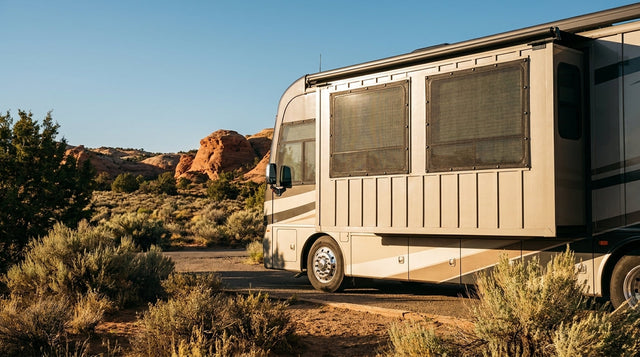
The skirting system shares its DNA with EZ-Snap's window products — the same patented snap, the same no-drill, cut-with-scissors ethos you will find on the exterior shade kits and across the broader RV shade lineup. One method, no holes, applied wherever a gap is costing you comfort. Cover the foundation, keep the wall, and let the first cold room of the morning finally feel like the rest of the house.
Sources
- DOE lists "Install insulated skirting" and "Add insulation to the belly" among the energy-efficiency improvements that substantially reduce heat loss in manufactured homes; it also recommends air sealing openings around plumbing and ducts. U.S. Department of Energy (Energy Saver), 2024 ↗
- DOE/NREL Weatherization job aid 15-1 directs installers to fill the entire belly cavity to the prescribed R-value 'while ensuring plumbing has sufficient insulation value to prevent condensation or freezing,' creating a 'consistent thermal boundary between conditioned and unconditioned space,' and to reinstall any removed skirting. U.S. Department of Energy / National Renewable Energy Laboratory (Weatherization Assistance Program, Job Aid 15-1), 2024 ↗
- Southern states generally start having issues with frozen pipes when the temperature reaches about 20 degrees Fahrenheit; bathroom and kitchen pipes are generally not insulated and rely on the heating system to keep warm. U.S. Department of Energy (Energy Saver), 2024 ↗
Common questions
How do you cover a house foundation gap without drilling into siding?
No-drill snap skirting covers an open house, pier-and-beam, or crawlspace foundation gap using a patented Cap and Pin snap backed with 3M VHB adhesive. The pin half bonds to your wall, the cap half holds the fabric, and the two snap together, so there are no screws into siding and no holes to caulk later. When spring comes, the panels unsnap and the wall underneath is untouched.
How long does the no-drill adhesive take to set?
The 3M VHB tape reaches full strength in roughly 72 hours and takes about 60 seconds of firm pressure per anchor to set. It cures best on a clean, dry surface above about 60°F, so fall is ideal, well before the first freeze. You are gluing small anchor points to clean siding rather than perforating it.
Does skirting a house foundation actually save energy?
Yes. The U.S. Department of Energy lists insulated skirting and underbelly insulation among the improvements that substantially reduce heat loss in manufactured homes, and it recommends air-sealing openings around plumbing and ducts. The same logic carries to any pier-and-beam or open-foundation house, where every gust under the floor pulls warmth down and out. In RV use this material can cut heating and propane costs by up to 40%.
Will foundation skirting keep my pipes from freezing?
Skirting does not heat the crawlspace, but it stops the wind from stripping away the heat that leaks down naturally, turning a wind-scoured cavity into a calmer, milder one. The DOE notes frozen-pipe trouble can begin around 20°F, and that most household pipes rely on the home's heat rather than their own insulation. In a genuine deep-freeze region, pair skirting with belly insulation and pipe protection for the coldest nights.
Can no-drill skirting follow uneven ground and a sloping grade?
Yes. The Diamond Weave fabric cuts to any odd run with scissors, around a porch step or a sloping grade, and the cut edges do not fray. A flexible woven skirt follows the grade instead of fighting it, unlike rigid panels that telegraph every bump and need framing. For a vented crawlspace you can skirt the perimeter and leave existing vents accessible to reopen in humid months.
What is the still-air principle behind foundation skirting?
Skirting works by trapping a layer of still, dead air against the foundation rather than by insulating in the fiberglass sense. That calmer air steadies the floor temperature above and shields plumbing from the wind. The DOE describes the goal as a consistent thermal boundary between conditioned and unconditioned space, and skirting is the outer half of that boundary.