Porch Skirting Ideas to Close the Crawl Space Gap
Key Takeaways
- The open space under a raised porch acts like the outdoors pressed against your floor — it pools cold air and pulls heat out through plumbing and duct penetrations.
- DOE lists insulated skirting and air-sealing around plumbing among the improvements that substantially reduce heat loss in raised-floor and manufactured homes.
- Skirting works by creating a still-air pocket: it stops wind and critters rather than insulating directly, so exposed pipes still need their own insulation against the ~20°F freeze threshold.
- Snap-on fabric skirting seals the porch perimeter all winter yet pulls off by hand for seasonal access, unlike permanent brick or screwed-down plywood.
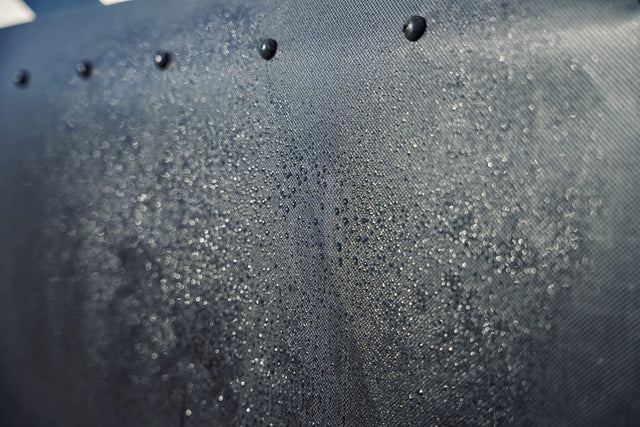
- EZ-Snap®'s no-drill Diamond Weave™ skirting installs DIY with scissors at your own pace and cites heating/propane savings of up to 40% from blocking the draft.
There is a particular kind of silence under a raised porch — a cold, hollow draft that moves where it shouldn't, carrying leaves, field mice, and the slow seep of winter into the joists overhead. Closing that gap is one of the quietest, highest-leverage things you can do to a house, and it asks almost nothing of you in return.
Most people meet the open space beneath a front porch with a shrug. It's out of sight, it's awkward to reach, and it feels like the kind of project that ends in a trip to the lumberyard and a weekend lost to a circular saw. But the crawl gap is not a cosmetic problem. It is an air problem and a critter problem, and both have practical, undramatic solutions that don't involve pouring concrete or framing a permanent wall you'll regret the first time a pipe needs attention.
What the crawl gap is actually costing you
A raised porch sits on piers or a low foundation, and the space underneath is, thermodynamically speaking, the outdoors pressed up against the underside of your floor. Cold air pools there. It finds the penetrations where plumbing and ductwork pass through, and it pulls heat down and out of the conditioned rooms above. The U.S. Department of Energy treats this exact category of loss seriously: for manufactured-floor homes, it lists insulated skirting and belly insulation among the improvements that substantially reduce heat loss, alongside air-sealing the openings around plumbing and ducts.1
There is a freeze dimension too. Exposed plumbing in an open crawl has nothing between it and the night air. DOE notes that pipes generally start having trouble around 20°F, and that most bathroom and kitchen runs aren't insulated — they coast on the warmth of the house, which is precisely the warmth an open crawl gap bleeds away.3 Skirting won't insulate a pipe by itself, but it does the thing that matters first: it stops the wind and traps a layer of still, calmer air around everything underneath.
Skirting doesn't heat the crawl space. It just stops the weather from getting in — and that's most of the battle.
The still-air principle, in plain terms
The reason any porch foundation skirting works is unglamorous. You are not building an insulated wall; you are creating a wind-break that converts a churning, ventilated cavity into a quiet pocket of trapped air. Air that doesn't move is a remarkably good buffer. DOE and NREL's weatherization guidance for raised-floor homes leans on exactly this idea — establishing a consistent thermal boundary between the conditioned space above and the unconditioned ground below, while making sure plumbing keeps enough insulation value to avoid condensation or freezing.2
That same job aid carries a detail worth holding onto: it instructs installers to reinstall any skirting they removed to get at the belly.2 Skirting is treated as a working part of the building's thermal envelope, not decoration. Which is the whole argument for choosing a system you can take off and put back without a fight.
Front porch skirting ideas worth your weekend
Here's the practical menu, roughly from most permanent to most flexible:
- Lattice panels. The default. Pretty, ventilated — and that ventilation is the problem, because a lattice skirt still lets wind, leaves, and small animals straight through. Good for looks, weak on the crawl gap.
- Brick or block infill. Permanent, handsome, and a genuine commitment. Every access need from here forward involves a mason or a sledgehammer.
- Framed plywood or cement board. Solid and sealed, but you're cutting, fastening, and painting — and you'll be prying a panel off (and patching it) anytime a pipe or junction needs reaching.
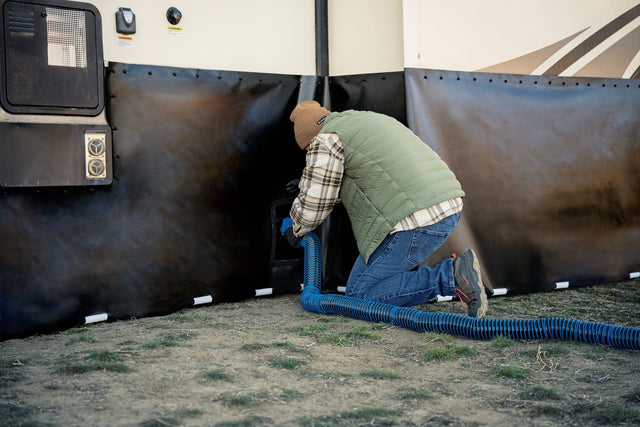
- Snap-on fabric skirting. A continuous fabric panel that seals the perimeter, blocks wind and animals, and comes off in sections by hand. This is the porch crawl space cover that respects the fact you'll need to get back in.
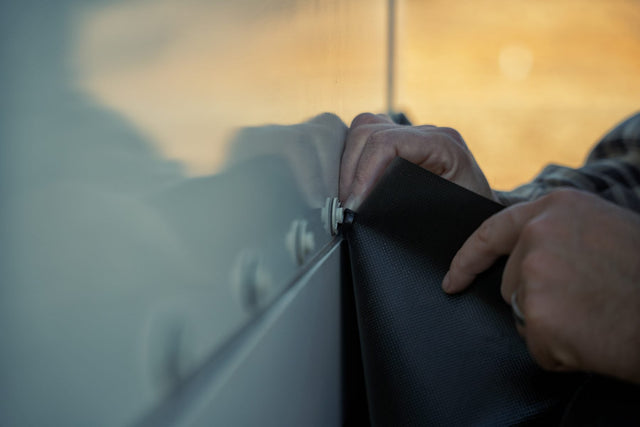
If you want to see how those trade-offs play out across a whole foundation rather than just a porch run, our breakdown of foundation covering options compared walks the same ladder in more detail. The fabric route is where EZ-Snap built its case. The skirting fabric is Diamond Weave™, engineered for the cold side of the calendar, and the same patented no-drill snap install the company has shipped since 2006 means no screws into your porch posts or foundation. You hang it, you trim it to the ground line with scissors, and when spring comes you unsnap the run you need and fold it back. For raised homes and RVs, EZ-Snap cites heating and propane savings of up to 40% from skirting alone — a number that comes from killing the draft, not adding a furnace. You can browse the no-drill porch skirting kit options to size one to your porch run.
Sealing the gap without sealing yourself out
The mistake that haunts permanent skirting is access. The day a shutoff valve weeps or a critter does get in behind a panel, the brick wall and the screwed-down plywood both become adversaries. A snap system inverts that: the perimeter is closed all winter, then opens on demand. It's the same logic behind covering a foundation gap without drilling into siding — you keep the wall you'd otherwise have to destroy to get back in.
If you're sealing a porch, do the boring things in the right order. Skirt the perimeter first to stop the wind. Then, inside that newly calm pocket, give the plumbing its own protection — pipe insulation on the exposed runs — because the skirt buys you margin against that ~20°F threshold but isn't a substitute for lagging a vulnerable line.3 The same no-drill, removable approach scales to other raised structures too, from a low deck — see these no-drill underdeck panel ideas — to a full mobile-home belly. If you want to read the mechanics of the no-drill attachment before committing, the full walkthrough of how the snap install works is the clearest starting point.
One system, more than one gap
The thinking that closes a porch crawl gap is the same thinking that solves a row of west-facing windows in July — control the air and the sun before they reach the house. EZ-Snap's warm-weather line runs on the same no-drill snap, using exterior shades whose black Optical Grade Thermo-Weave™ mesh blocks up to 90% of solar heat at the glass. Exterior shading is, in DOE's framing, the most effective way to cut solar heat gain — stopping heat outside the window rather than fighting it indoors. If your porch project goes well, the exterior shade collection is the summer half of the same idea.
The crawl gap under a raised porch is a small opening that does outsized damage — drafts in, warmth out, animals through the middle. You don't need a permanent wall to close it. You need a wind-break you can put up yourself at your own pace and take down without a crowbar, sized to the season and honest about the access you'll inevitably want back.
Sources
- DOE lists "Install insulated skirting" and "Add insulation to the belly" among the energy-efficiency improvements that substantially reduce heat loss in manufactured homes; it also recommends air sealing openings around plumbing and ducts. U.S. Department of Energy (Energy Saver), 2024 ↗
- DOE/NREL Weatherization job aid 15-1 directs installers to fill the entire belly cavity to the prescribed R-value 'while ensuring plumbing has sufficient insulation value to prevent condensation or freezing,' creating a 'consistent thermal boundary between conditioned and unconditioned space,' and to reinstall any removed skirting. U.S. Department of Energy / National Renewable Energy Laboratory (Weatherization Assistance Program, Job Aid 15-1), 2024 ↗
- Southern states generally start having issues with frozen pipes when the temperature reaches about 20 degrees Fahrenheit; bathroom and kitchen pipes are generally not insulated and rely on the heating system to keep warm. U.S. Department of Energy (Energy Saver), 2024 ↗