Houseboat Cabin Shades: Stay Cool at the Dock Without A/C

Key Takeaways
- Exterior shade mesh blocks solar heat before it reaches the glass, which the U.S. Department of Energy calls the most effective way to reduce solar heat gain.
- Depending on the material, exterior solar screens can block up to about 90% of solar heat gain before it touches the window.
- Interior blinds and curtains help with glare but do little for heat, because sunlight has already passed through the glass before it hits them.
- The EZ Snap Sun Screen uses Optical Grade Thermo-Weave mesh and a patented no-drill Cap & Pin snap, so it installs on a boat without drilling into the hull.
- Heat gain and loss through windows account for roughly 25-30% of a structure's heating and cooling energy, making windows the place to attack cabin heat first.
There is a specific kind of heat that only liveaboards know: the cabin at three in the afternoon, hatches open, not a breath of wind off the water, the fiberglass roof radiating like a stovetop while the dock around you sits still and bright. You can run the A/C off shore power and listen to the meter spin, or you can stop the heat at the glass before it ever gets in. This is a piece about the second option.
Why a houseboat cabin bakes at the dock
A boat cabin is a greenhouse that floats. The water below reflects sun upward, the surrounding marina has no shade trees, and large salon windows that frame a beautiful view also funnel solar radiation straight onto your settee. The physics are the same as on land, only concentrated. Windows are the thermal weak link of any enclosure — they leak and admit heat far out of proportion to their area.6 On a houseboat, where glass can dominate the cabin sides, that weak link becomes the whole story.
Here is the part most people get backwards. The heat you feel isn't coming through the walls — it's coming through the windows as light, then converting to trapped warmth once it's inside. The industry term is Solar Heat Gain Coefficient: the fraction of solar radiation a window admits and then releases as heat indoors.5 Heat gain and loss through windows account for 25% to 30% of the cooling and heating energy a typical structure uses.4 Your A/C isn't fighting the afternoon. It's fighting your windows.
Why interior blinds lose the fight
Most liveaboards reach for what's already aboard: curtains, mini-blinds, the snap-in privacy shades that came with the boat. They help with glare and they help with prying eyes at the dock. They do very little about heat. By the time sunlight strikes an interior blind, it has already passed through the glass and dumped its energy inside the cabin. The blind warms up and re-radiates that heat right back at you — which is the whole crux of the shades-versus-blinds question for cabin comfort.
The Department of Energy is blunt about this. Interior attachments "can be less effective at reducing heat gain than comparable exterior shading systems because they do not block direct sunlight until after it has already passed through the window."2 The fix is to intercept the sun on the outside — to keep it off the glass entirely.
Stop the sun at the glass and you never have to chase the heat once it's inside.
The case for exterior shade mesh
Exterior shading is, in the DOE's own words, the most effective way to reduce solar heat gain.1 The reason is simple: an exterior screen blocks solar heat before it reaches the window.2 Depending on the material, a solar screen can block up to roughly 90% of solar heat gain before it ever touches the glass.3
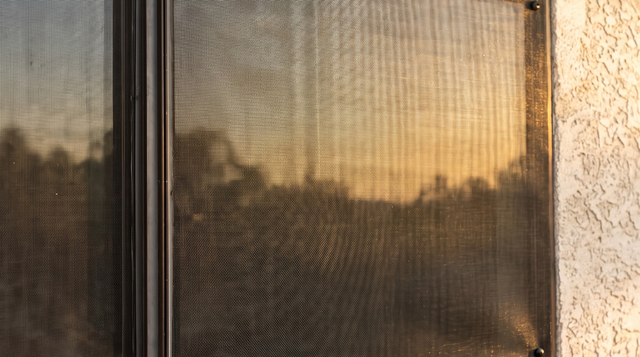
That is exactly what the EZ Snap® Sun Screen does, using a marine-suitable mesh called Optical Grade Thermo-Weave™. The black mesh blocks up to 90% of the sun's heat while you keep your view out — from inside the cabin you still see the water; from outside, the glare is gone. Prefer a brighter cabin? The white mesh lets more light through with less heat rejection. The cloth cuts to any window shape with ordinary scissors and won't fray at the edges, which matters on a boat where almost no two openings are square. It's the same approach behind boat window covers that block heat without drilling.
If you're weighing this against running the air conditioner all summer at anchor, the math is friendly. Kits start at $66.95, with free shipping over $225 — a one-time, no-fuel cost against a season of compressor cycles. You can read the full approach on the how-it-works page, or browse what fits your boat in Shop Boat Shades.
Installing without drilling into your hull
The objection every boat owner raises first: I am not drilling holes in my cabin. Neither would we. EZ Snap uses a patented no-drill Cap & Pin snap mounted with 3M VHB adhesive — no screws, no fasteners through gelcoat, nothing to chase a leak from later. The pins press on at roughly 60 seconds per stud, cure best around 60°F, and reach full strength in about 72 hours. You snap the shade panels onto the pins, and they come off just as easily when you want to wash the windows or pull everything for a haul-out.
For most boats this is an afternoon with a pair of scissors and a tape measure. Clean the surface, lay out your studs, press them on, let the adhesive set overnight, then cut and snap your panels. There's no canvas shop, no template appointment, no special tools.
A few liveaboard-specific notes
- Salt and UV. The mesh and snaps are built for outdoor exposure, but rinse the panels when you rinse the boat — clean gear simply lasts longer.
- Removable by design. Because panels unsnap, you can stow them for bridges, locks, or storms and re-hang in seconds.
- View preserved. Black mesh keeps your outward sightline to the water while killing inbound glare — useful when you're living at the dock, not just visiting.
What this means for life at anchor
The goal of a liveaboard cabin shade isn't to make the boat dark. It's to make the boat livable without tethering yourself to shore power and a humming compressor. When you keep the sun off the glass, the A/C — if you run it at all — has dramatically less work to do, because you've removed a large slice of the cooling load at its source.4 A low-heat-gain setup is most effective precisely in the summer, when cooling is what's draining your batteries and your wallet.5
EZ Snap has been making exterior shade systems since 2006 and has served more than 38,000 customers across boats, RVs, cabins, and homes, with a Limited Lifetime warranty on the materials. The houseboat case is just the marine expression of one durable idea: the cheapest air conditioning is the heat that never gets in. The same playbook works below deck on a sailboat too, as in our guide to no-drill sailboat cabin shades.
If your boat also has overhead glass, the same logic carries to skylight and hatch shades, and the broader exterior shade lineup covers cabins and rigs of every shape. Measure your worst-facing windows first — the ones that catch the afternoon sun — and start there. That's where the cabin bakes, and that's where stopping the sun pays back fastest. From there you can size an exterior shade kit for your cabin windows.
Sources
- "Exterior shutters and shades... are most effective at reducing solar heat gain." The page also states window awnings can reduce solar heat gain by up to 65% on south-facing windows and 77% on west-facing windows. U.S. Department of Energy (Energy Saver), 2024 ↗
- "Exterior window attachments block solar heat before it reaches the window." Interior attachments "can be less effective at reducing heat gain than comparable exterior shading systems because they do not block direct sunlight until after it has already passed through the window." DOE Building America Solution Center (Pacific Northwest National Laboratory), 2023 ↗
- "Depending on the material used, solar screens have the potential to block up to 90% of solar heat gain before it even reaches the window." U.S. Department of Energy, Office of Energy Efficiency & Renewable Energy (EERE), 2023 ↗
- "Heat gain and heat loss through windows are responsible for 25%-30% of residential heating and cooling energy use." U.S. Department of Energy — Energy Saver, 2024 ↗
- SHGC is "the fraction of solar radiation admitted through a window, door, or skylight — either transmitted directly and/or absorbed, and subsequently released as heat inside a home"; a low-SHGC product "is more effective at reducing cooling loads during the summer by blocking heat gain from the sun." U.S. Department of Energy — Energy Saver, 2024 ↗
- Windows "are known as the weakest link in the thermal envelopes" and are "attributable for approximately 10% of building energy use"; though only ~8% of envelope area, they can contribute "up to 45% of the envelope heat loss" in climate zones 4 and 5. Lawrence Berkeley National Laboratory — Windows & Daylighting, 2023 ↗
Common questions
How do you keep a houseboat cabin cool without A/C?
Stop the sun at the glass with exterior shade mesh before it ever gets inside. Exterior shading is what the U.S. Department of Energy calls the most effective way to reduce solar heat gain, and depending on the material a solar screen can block up to about 90 percent of that heat before it reaches the window.
Why don't interior blinds keep a boat cabin cool?
By the time sunlight strikes an interior blind or curtain, it has already passed through the glass and released its energy inside the cabin. The blind then warms up and re-radiates that heat back at you. Interior attachments help with glare and privacy but do little for heat, which is why the fix has to sit outside the glass.
Can you install boat window shades without drilling into the hull?
Yes. The shades mount on a patented no-drill Cap and Pin snap held by 3M VHB adhesive, so there are no screws or fasteners through the gelcoat and nothing to chase a leak from later. The pins press on at roughly 60 seconds per stud, cure best around 60 degrees, and reach full strength in about 72 hours.
Do exterior boat shades block your view of the water?
No. The black mesh preserves your outward sightline so you still see the water from inside the cabin, while killing the inbound glare and blocking up to 90 percent of the sun's heat. If you prefer a brighter cabin, the white mesh lets more light through with less heat rejection.
How much of a boat's cooling load comes through the windows?
Heat gain and loss through windows account for roughly 25 to 30 percent of the heating and cooling energy a typical structure uses, and on a houseboat where glass dominates the cabin sides that share is even more concentrated. Windows are the thermal weak link, so they are the first place to attack cabin heat.
How much do boat shade kits cost?
Kits start at $66.95, with free shipping on orders over $225. That is a one-time, no-fuel cost weighed against a season of running the air conditioner off shore power. The panels also unsnap easily, so you can stow them for bridges, locks, or storms and re-hang them in seconds.