Window Sun Shades: The Exterior Buyer's Guide to Blocking Heat Before It Hits the Glass

Key Takeaways
- Exterior window sun shades work because they block sunlight before it reaches the glass; the U.S. Department of Energy calls exterior shutters and shades the most effective option for reducing solar heat gain.
- Interior curtains and blinds are inherently limited because the sun has already passed through the glass before they can absorb it, releasing heat on the inside of the room.
- Solar screens can block up to 90% of solar heat gain before it reaches the window, depending on the mesh material.
- Black mesh maximizes heat rejection while keeping a clear outward view; white mesh lets in more daylight with less heat control.
- EZ-Snap®’s no-drill Cap & Pin snap and 3M VHB tape let most homeowners install exterior shades in an afternoon with scissors, no holes in the siding or frames.
There is a moment, somewhere around two in the afternoon in July, when a sunny window stops being a view and becomes a heater. You can feel it with the back of your hand a foot away from the glass — that warm, radiant push — and that push is the whole problem this guide is about: by the time you feel it, the heat is already inside, and your air conditioner is the one paying for it.
That is the quiet logic behind exterior window sun shades, and it is why where you stop the sun matters more than almost anything else you can buy for a hot window. Most shopping for window sun blockers starts indoors — a blackout curtain, a cellular blind, a reflective film — but the physics of a summer afternoon rewards the opposite instinct. The most effective place to intercept sunlight is outside, before the glass ever gets a vote.
The heat is already inside before you draw the curtain
Start with where the energy goes. Heat gain and heat loss through windows account for roughly 25–30% of residential heating and cooling energy use, which is an enormous share for a surface that makes up a sliver of your wall area.4 Windows are, in the words of building scientists, the weakest link in a home’s thermal envelope — only about 8% of the envelope by area, yet responsible for a wildly outsized fraction of the heat moving in and out.6
The reason an interior shade can’t fully fix this is a single word: glass. Solar radiation passes through the pane, is absorbed by your curtain or blind, and then re-radiates as heat — on the wrong side of the window. The Department of Energy puts it plainly: interior attachments "can be less effective at reducing heat gain than comparable exterior shading systems because they do not block direct sunlight until after it has already passed through the window."2 The curtain gets warm. The room gets warm. The AC runs.
An interior shade fights the heat. An exterior shade keeps the heat from ever showing up.
Why exterior wins — straight from the building scientists
This isn’t a marketing claim; it’s the consensus position. The DOE’s own Energy Saver guidance states that exterior shutters and shades "are most effective at reducing solar heat gain," and notes that exterior awnings can cut summer solar heat gain by up to 65% on south-facing windows and 77% on west-facing ones.1 The mechanism is the same one any porch roof demonstrates: stop the light outside, and the heat simply never enters the building.
Solar screens take that principle and apply it directly to the glass. According to the DOE, depending on the material, solar screens block heat right at the glass and "have the potential to block up to 90% of solar heat gain before it even reaches the window."3 That word — before — is the entire value proposition of exterior sun shades. You’re not managing heat once it’s in the room. You’re stopping it at the property line of the glass.
What SHGC actually measures (and why your AC cares)
If you’ve shopped for windows, you’ve seen the acronym SHGC — Solar Heat Gain Coefficient. It’s the fraction of solar radiation admitted through a window and "subsequently released as heat inside a home," and a lower number means less cooling load in summer.5 Replacing windows to chase a better SHGC is one path. Mounting a screen on the outside that intercepts the sun first is the faster, cheaper one — and it works on the windows you already own.
Black mesh vs. white mesh: choosing your heat blocker
This is where a real product decision lives. The EZ-Snap Sun Screen uses an Optical Grade Thermo-Weave™ mesh — the shade-side cousin of the brand’s heavy-duty Diamond Weave™ skirting fabric — and it comes in two characters.
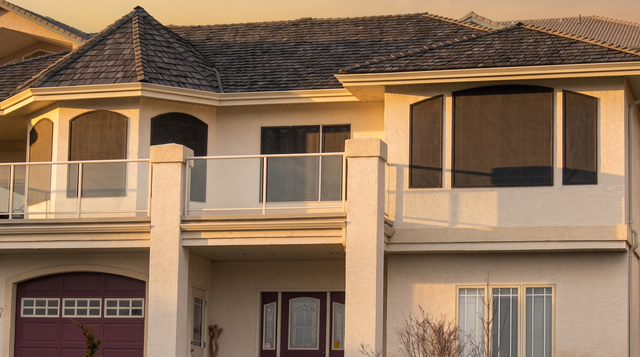
- Black mesh is the heat specialist. It blocks up to 90% of solar heat while preserving a remarkably clear, glare-free view looking out — the screen seems to vanish from inside while the world outside stays visible. This is the choice for west- and south-facing rooms that bake.
- White mesh trades some heat rejection for brightness. It still shades and softens harsh light, but lets more daylight into the room, which suits north-facing windows or spaces where you’d rather not dim things down.
The mesh itself is the quiet hero: it cuts to any window shape with scissors, doesn’t fray at the edges, and handles arched, round, and oversized openings that off-the-shelf sun shades for windows never fit. For a fuller walk-through of fit and mounting, the how-it-works overview is worth a look before you measure.
The install that doesn’t involve a drill
Here’s the part that converts skeptics. Conventional outdoor sun shades for windows mean brackets, anchors, and holes in your siding or frames. EZ-Snap’s patented no-drill snap shade system mounts to a strip of 3M VHB tape instead — no fasteners, no holes, nothing voided.
A few practical notes from the spec sheet, because the chemistry matters:
- The VHB adhesive takes about 60 seconds of firm pressure per stud to set, and reaches full strength in roughly 72 hours.
- Apply it above about 60°F so the adhesive cures properly — a warm afternoon is ideal.
- Most homes install in a single afternoon with scissors and a tape measure. No installer, no power tools.
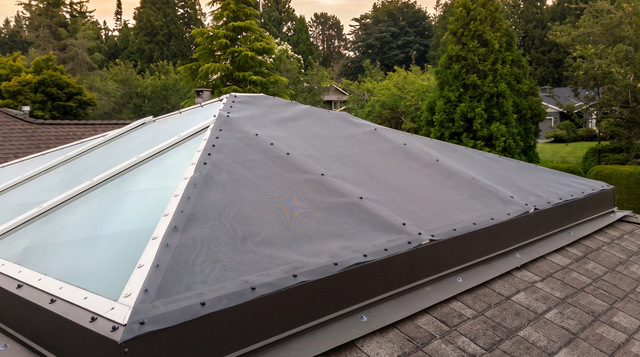
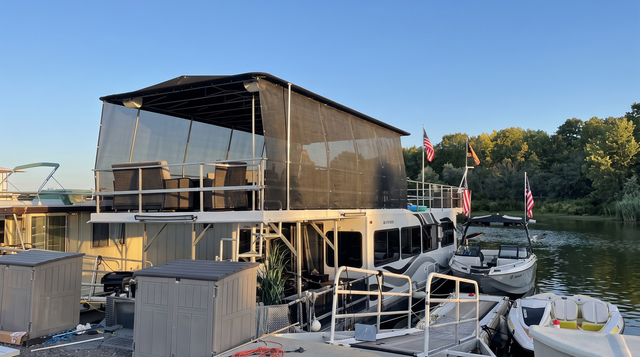
Kits start at $66.95, with free shipping over $225, and the mesh carries a Limited Lifetime materials warranty from a company that’s been making this stuff since 2006 for more than 38,000 customers. The same snap-and-screen approach scales across the catalog — from RV shades for the rig that turns into an oven at a campsite, to skylight shades for the room that gets cooked from above.
So which window do you start with?
If you’re standing in your house wondering where the budget goes first, follow the sun. West-facing windows take the brutal low-angle afternoon light and are the single best place to mount your first screen; south-facing glass is next. Rooms with a wall of windows, a home office that glares out at 3 p.m., an upstairs bedroom that won’t cool down — these are exactly the spots where stopping heat at the glass changes how the room feels, and a room-by-room heat-control plan makes the order of attack obvious.
The interior shade was never going to win this fight, because it was always standing in the wrong place. Move the line of defense outside, and the math finally works in your favor. When you’re ready to size your windows and pick a mesh, start at Shop Exterior Window Shades and let the sun’s direction make the first decision for you.
Sources
- "Exterior shutters and shades... are most effective at reducing solar heat gain." The page also states window awnings can reduce solar heat gain by up to 65% on south-facing windows and 77% on west-facing windows. U.S. Department of Energy (Energy Saver), 2024 ↗
- "Exterior window attachments block solar heat before it reaches the window." Interior attachments "can be less effective at reducing heat gain than comparable exterior shading systems because they do not block direct sunlight until after it has already passed through the window." DOE Building America Solution Center (Pacific Northwest National Laboratory), 2023 ↗
- "Depending on the material used, solar screens have the potential to block up to 90% of solar heat gain before it even reaches the window." U.S. Department of Energy, Office of Energy Efficiency & Renewable Energy (EERE), 2023 ↗
- "Heat gain and heat loss through windows are responsible for 25%-30% of residential heating and cooling energy use." U.S. Department of Energy — Energy Saver, 2024 ↗
- SHGC is "the fraction of solar radiation admitted through a window, door, or skylight — either transmitted directly and/or absorbed, and subsequently released as heat inside a home"; a low-SHGC product "is more effective at reducing cooling loads during the summer by blocking heat gain from the sun." U.S. Department of Energy — Energy Saver, 2024 ↗
- Windows "are known as the weakest link in the thermal envelopes" and are "attributable for approximately 10% of building energy use"; though only ~8% of envelope area, they can contribute "up to 45% of the envelope heat loss" in climate zones 4 and 5. Lawrence Berkeley National Laboratory — Windows & Daylighting, 2023 ↗
Common questions
Do exterior window shades work better than interior blinds?
Yes, exterior shades work better because they stop sunlight before it reaches the glass, while interior blinds only react to heat that has already passed through the window and entered the room. The U.S. Department of Energy calls exterior shutters and shades the most effective option for reducing solar heat gain. Once heat is inside, a curtain is fighting it, not blocking it.
How much solar heat can exterior sun screens block?
Exterior solar screens can block up to 90% of solar heat gain before it reaches the window, depending on the mesh material, according to the Department of Energy. Black mesh maximizes that heat rejection while keeping a clear outward view, which makes it the choice for west and south facing rooms that overheat in the afternoon.
What is the difference between black and white shade mesh?
Black mesh is the heat specialist, blocking up to 90% of solar heat while preserving a clear, glare-free view looking out. White mesh trades some heat rejection for brightness, letting more daylight into the room. Pick black for hot west and south windows, and white for north-facing rooms or spaces you would rather not dim.
Which windows should I shade first for the most cooling benefit?
Start with west-facing windows, which take the harsh low-angle afternoon light and are the single best place for your first screen. South-facing glass is next. Rooms with a wall of windows, a home office that glares at 3 p.m., or an upstairs bedroom that will not cool down are the spots where stopping heat at the glass changes how the room feels.
Can exterior sun shades be installed without drilling holes?
Yes, EZ-Snap exterior shades install with no drilling, using a patented Cap and Pin snap mounted on 3M VHB tape instead of brackets or anchors. There are no holes in your siding or frames. Most homes install in a single afternoon with scissors and a tape measure, with kits starting at $66.95 and free shipping over $225.
What temperature do I need to install the adhesive shades?
Apply the shades when the surface is above roughly 60F so the 3M VHB adhesive cures properly, which makes a warm afternoon ideal. The adhesive takes about 60 seconds of firm pressure per stud to set and reaches full strength in roughly 72 hours. Cutting the non-fray mesh to any window shape is done with ordinary scissors.